
Synopsis
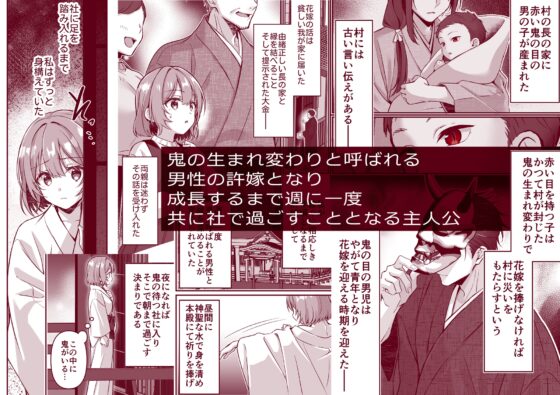
A child with crimson demon eyes was born to the village chief’s household.
The village harbors an ancient legend: children born with red eyes are reincarnations of a demon sealed away long ago, and a bride must be offered to prevent calamity upon the village.
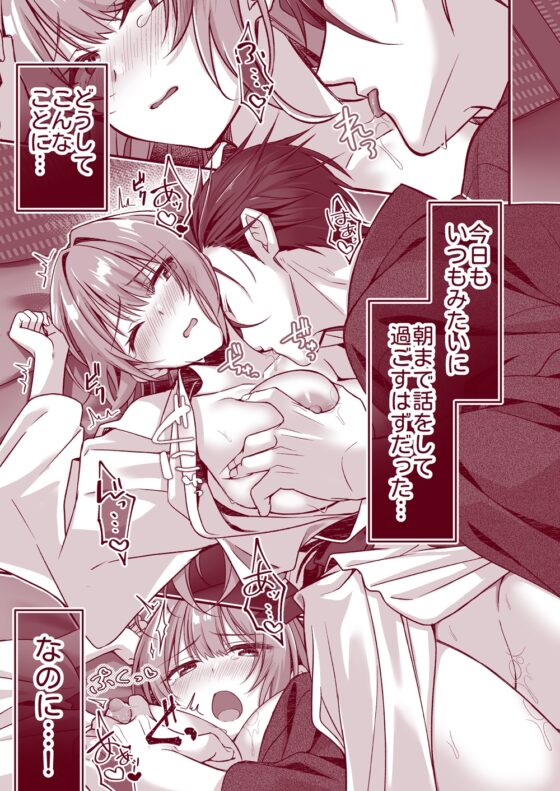
The protagonist, Shiraishi Chizuru, designated as the bride to be offered, must spend one day each week in seclusion at the shrine with her betrothed—the man called the demon, Takawa Kaname—until she reaches a suitable age for marriage.
Chizuru braced herself for the ominous title, but found instead a gentle young man with a human appearance.
She spends peaceful days believing the reincarnation to be mere superstition.
However, on the day of their wedding ceremony, he undergoes a sudden and drastic transformation…
51 pages



Get “A Bride Offered to the Demon” on DLsite
This Week’s Top Rankings:
Editorial Review
A Bride Offered to the Demon positions itself as a supernatural romance that weaponizes the age-gap premise through reincarnation mythology—a framework that’s become increasingly common in Japanese doujin works seeking to narrativize power imbalances and possessive dynamics under folkloric cover.
What distinguishes this entry is its deliberate staging of two distinct relationship phases. The slow-burn courtship during the protagonist’s adolescence establishes emotional intimacy and trust under the guise of spiritual obligation, creating the psychological groundwork for the dramatic pivot at the wedding ceremony. The sudden transformation sequence—implied by the “corruption” tag and thematic shift toward “possessive” behavior—appears designed to recontextualize everything that preceded it, turning earlier tenderness into calculated grooming in retrospect. The “kimono” aesthetic signals period-appropriate worldbuilding, while tags like “devotion” and “sweet romance” suggest the work frames the protagonist’s acceptance of the demon’s true nature as romantic rather than coercive, a choice that carries significant narrative weight.
The “pregnancy” outcome indicates this is commitment-narrative erotica rather than transgressive fantasy—the endpoint validates the relationship through procreation and domestic settlement. At 51 pages, there’s enough breathing room to develop character voice and emotional stakes, though whether the work justifies its premise or simply employs it as scaffolding remains the critical question.
Readers specifically drawn to devotion-coded heroines who rationalize possessive partners through supernatural destiny will find this hits established marks. Those uncomfortable with narratives that leverage age gaps and power imbalances—even when softened by romance framing—should note the structural architecture here makes those elements central rather than incidental.
A competent execution of a morally complex fantasy romance for readers with high tolerance for its particular mixture of vulnerability and possession.
Related Tags:
Creampie | pregnancy | Corruption | sweet romance | Age Gap
📖 How to buy on DLsite — step-by-step guide
💳 Payment methods for overseas buyers (Visa/MC declined?)
Interested? Get the free trial here ↓



![[Sampler] How a Lonely Vampire Reclaims His Reincarnated Fiancée ~An Obsessive Love Spanning 300 Years~](https://henhenta.com/wp-content/uploads/2026/09/RJ01114970-300x225.jpg)