
Synopsis
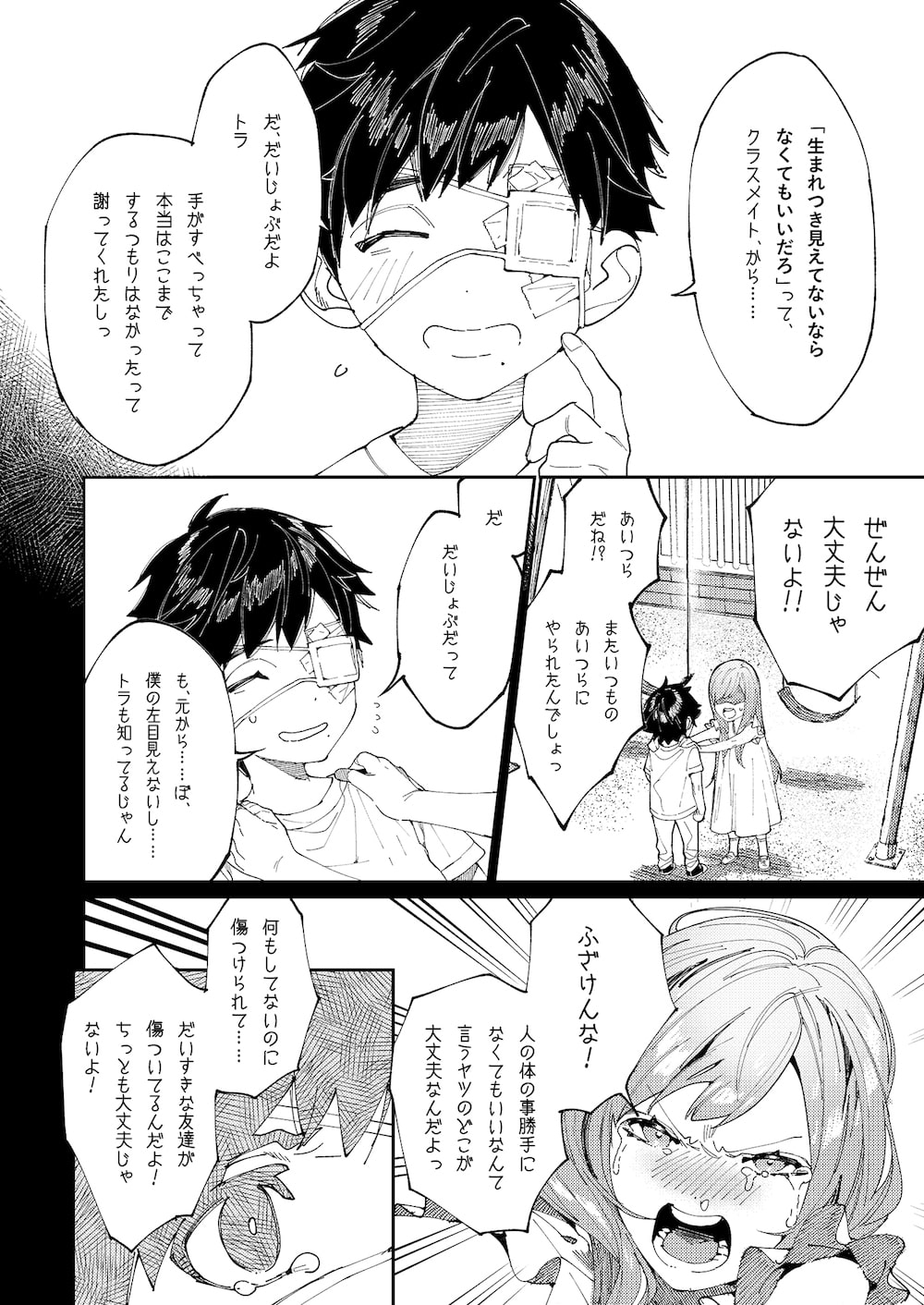
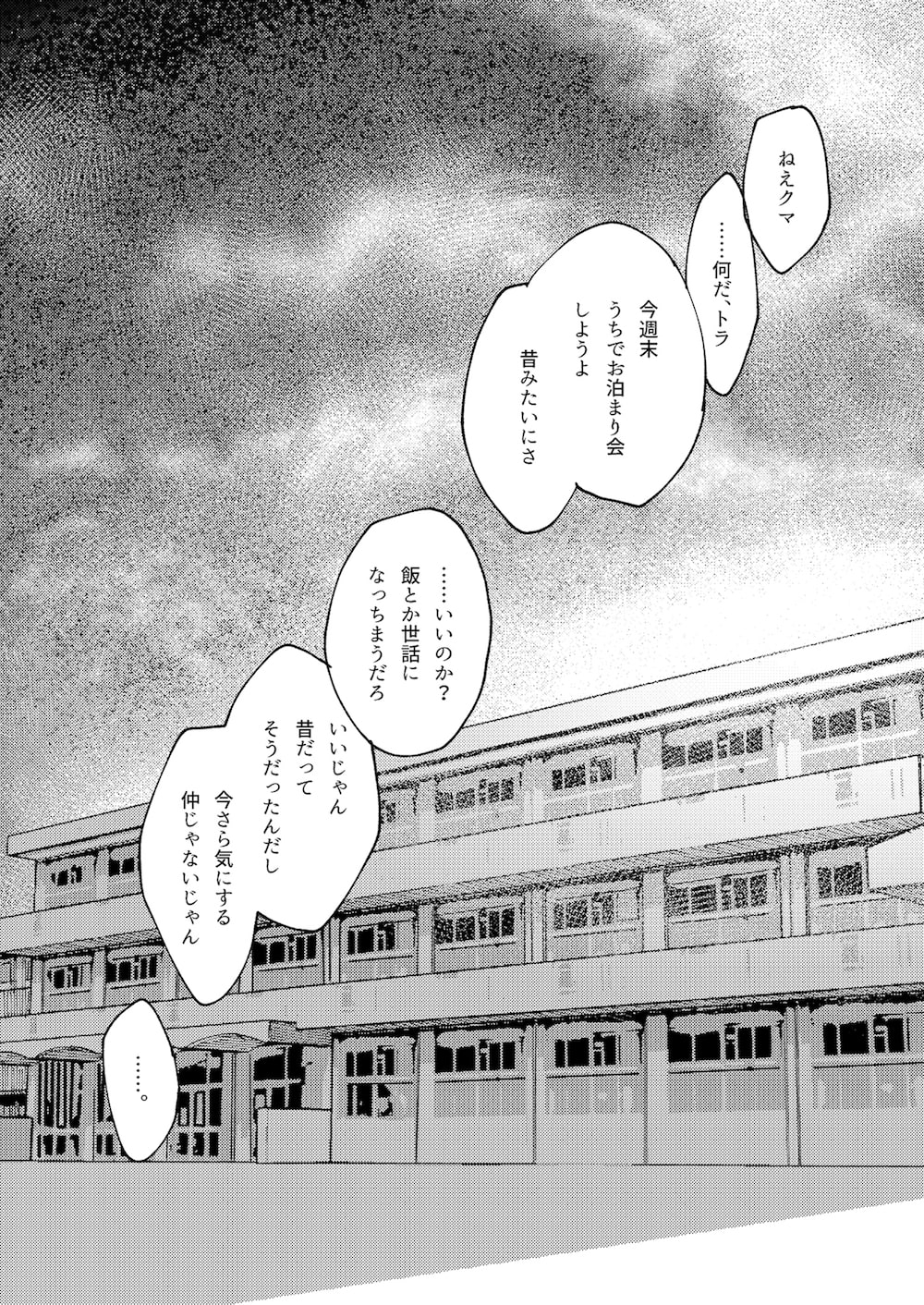
One day, Agito Okuma—a childhood friend the protagonist called “Kuma”—transfers to their school. While officially a transfer, it’s actually the result of expulsion due to misconduct at his previous school. Unlike his well-behaved past self, Kuma has become a delinquent. Meanwhile, Tora, once carefree, can no longer do the things she used to enjoy. Both have transformed completely. Kuma and Tora, hybrid beings caught between childhood and adulthood, reconnect through their reunion, drawing closer as they recall shared memories. This is a story of childhood friends becoming mature beings together. A gruff delinquent boy × childhood friend girl. Total 77 pages including cover, main story, and extras.



| Circle | Aizawa’s Butcher |
| Tags | R18, Manga, JPEG, PDF file, Otome, Japanese |
| Price | 385JPY |
Editorial Review
Grounded in the “half-adult creature” (おどな) subgenre—a Japanese doujin niche that explores liminal characters caught between childhood and adulthood—this work positions itself as a character-driven rekindling narrative rather than a typical delinquent-romance setup. The genre has seen increasing sophistication in recent years, moving beyond surface-level bad-boy appeal toward genuine emotional archaeology, and this title appears to follow that trajectory.
What distinguishes this piece is its deliberate thematic symmetry: both protagonists have undergone inverse transformations since childhood, with Bear’s descent into delinquency mirroring Tiger’s loss of courage (her inability to touch insects paralleling his apparent emotional shutdown). This structural mirroring—childhood intimacy fractured by divergent paths, then reconstructed through physical and emotional proximity—gives the work conceptual coherence beyond its R18 framing. The 69-page core narrative suggests real investment in character development alongside explicit content, avoiding the trap of treating sexuality as mere padding.
The production quality indicators point toward a professional-adjacent doujin: 77 pages total with supplementary materials (omake, afterword) suggests creator intent toward completeness rather than a quick cash grab. The careful disclaimer about consent mechanics and fantasy elements indicates awareness of reader expectations in this demographic space.
Tiger’s perspective as protagonist in a “reformed delinquent pursues childhood friend” dynamic inverts typical otome conventions where the heroine is often passive. Pairing that with explicit negotiation around contraception and mutual consent marks this as aiming for an adult female readership skeptical of fantasy nonsense.
This will resonate most with readers seeking genuine character reconciliation wrapped in explicit content—the kind who need emotional weight behind the beast-mode premise. If you’ve grown tired of hollow bad-boy narratives, this delivers on its promise of two people genuinely becoming something different together.
Get “Bear and Tiger: From First Tim” on DLsite
This Week’s Top Rankings:
📖 How to buy on DLsite — step-by-step guide
💳 Payment methods for overseas buyers (Visa/MC declined?)
Interested? Get the free trial here ↓



![[Sampler] How a Lonely Vampire Reclaims His Reincarnated Fiancée ~An Obsessive Love Spanning 300 Years~](https://henhenta.com/wp-content/uploads/2026/09/RJ01114970-300x225.jpg)