
Synopsis
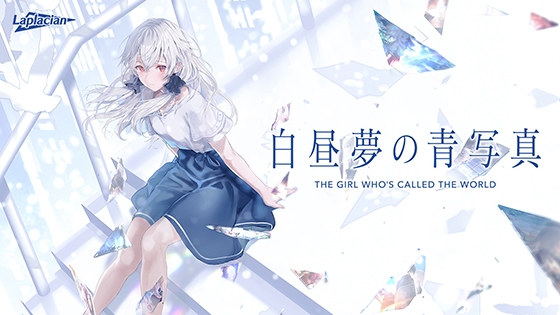
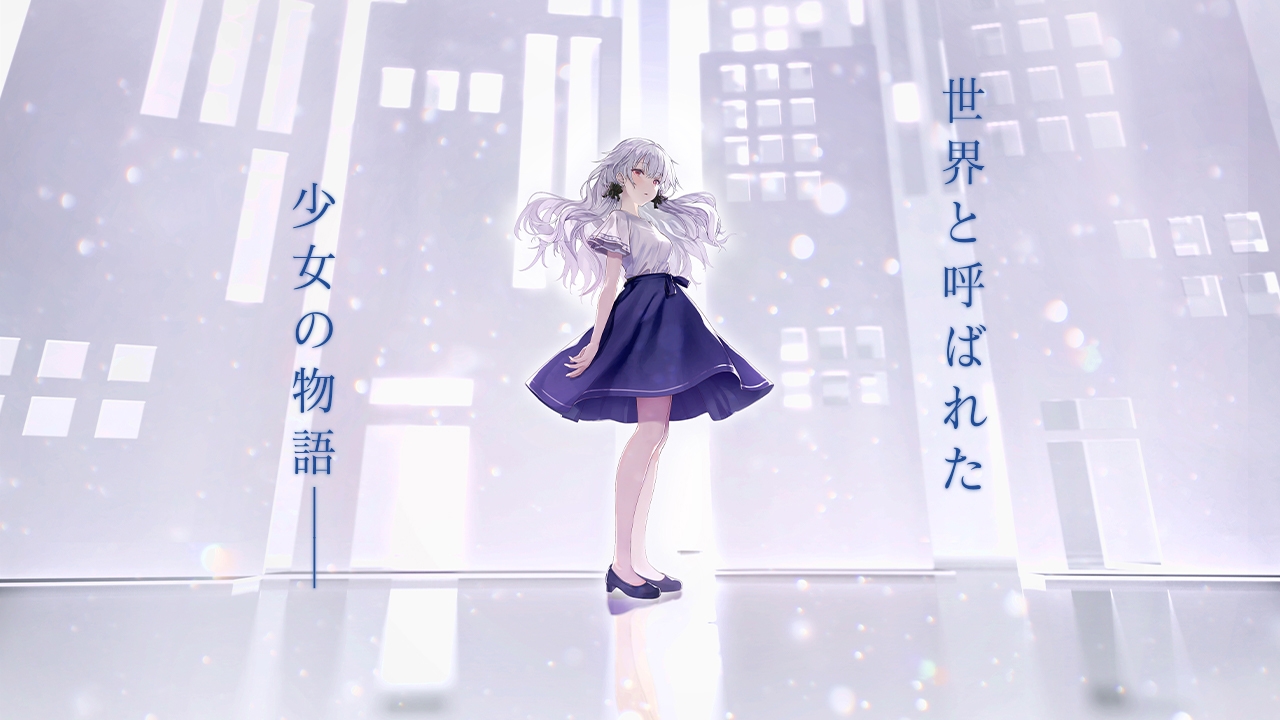
This is the story of a girl called “the world.” It tells of a pure love between a girl who devoted everything to the world and a young man. Three randomly initiated storylines ultimately converge into one narrative. Upon finishing the final sentence, players are left with emotions that defy simple expression. Leveraging the unique characteristics of visual novels, this work recreates an intensely passionate love story. After encountering “farewells” with three girls, the narrative unveils the truth about one girl. Experience this emotionally moving love story that has touched the hearts of countless users. The protagonist Kaito awakens in an unfamiliar room with no memory of his identity or location. Accompanied only by a silent girl named Senagi, he discovers his role is to experience three dreams. As these dreams reach tragic conclusions, Kaito learns the truth about himself.


| Circle | Laplacian |
| Tags | アドベンチャー, 音声あり, 音楽あり, 中国語(簡体字), 中国語(繁体字), 日本語, 英語 |
| Price | 2,400円 |
Editorial Review
Cyanotype Daydream operates in the increasingly crowded space of experimental visual novels that prioritize emotional architecture over conventional narrative structure. What distinguishes it immediately is its three-path convergence design—randomized story sequences that reconverge into a single truth—a structural choice that demands replay and transforms the reading experience into something closer to puzzle-solving than passive consumption.
The work’s thematic core hinges on the tension between fragmentation and unity: three seemingly separate dreams about different girls eventually collapse into the revelation of a single girl’s truth. This is narrative sleight-of-hand executed through visual novel form, where branching becomes metaphysical rather than mechanical. The presence of voice acting and original music across multiple languages (Japanese, English, Simplified and Traditional Chinese) signals a production scale unusual for doujin work, suggesting genuine investment in atmospheric immersion across the “three dreams” conceit.
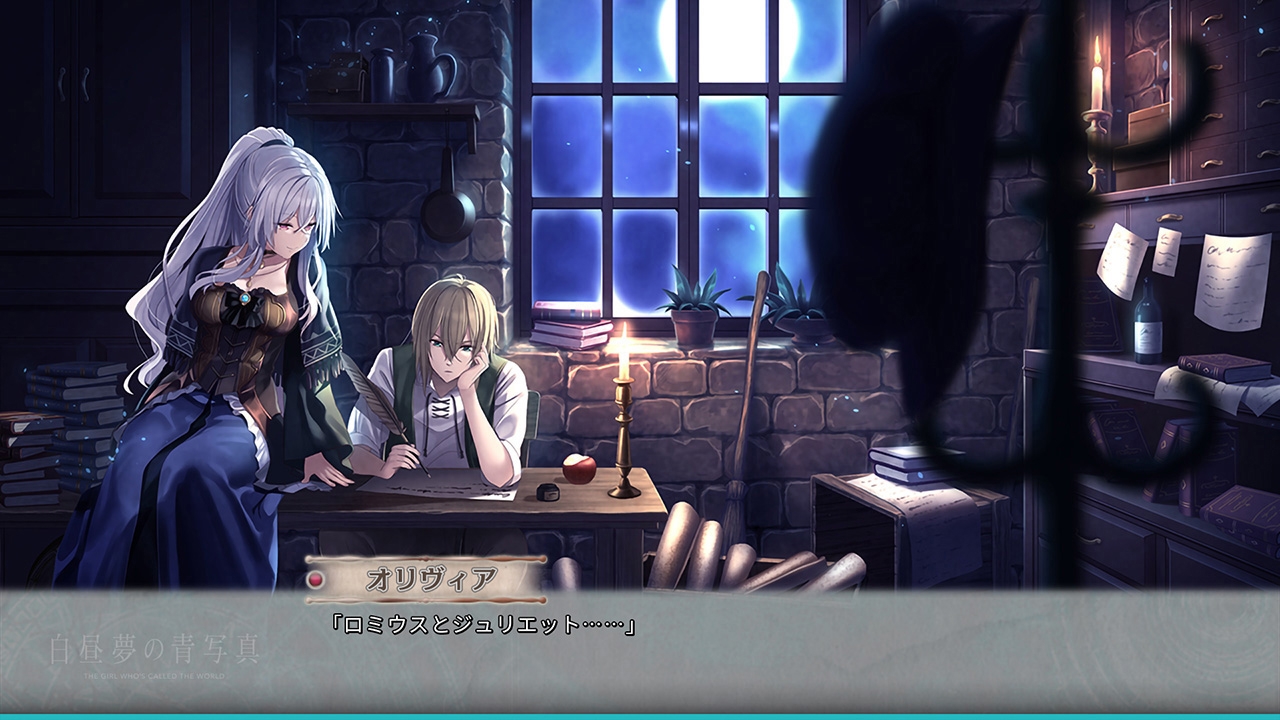
Character construction is deliberately literary—the synopsis emphasizes interiority over event. Rin emerges as a melancholic reader haunted by paternal loss; Olivia as a gender-transgressive aristocrat performing masculinity as liberation. These are psychologically textured characters designed to reward close reading. The framework of watching a protagonist experience others’ dream-lives creates inherent emotional distance that the work apparently leverages to generate a specific cathartic payoff at its conclusion.
The danger here is that experimental structure can overshadow execution. Whether the three-path convergence genuinely lands as revelation rather than gimmick depends entirely on writing precision and the emotional scaffolding that leads to that final sentence.
Readers seeking narratively ambitious visual novels willing to subordinate plot momentum to character meditation and structural experimentation will find considerable depth here. This is romance as philosophical inquiry, not entertainment commodity.
Get “Cyanotype Daydream – The Girl ” on DLsite
This Week’s Top Rankings:
📖 How to buy on DLsite — step-by-step guide
💳 Payment methods for overseas buyers (Visa/MC declined?)
Interested? Get the free trial here ↓




![[Android Ver.] [ENG Ver.] Luna in the Lewd Lost City](https://henhenta.com/wp-content/uploads/2026/10/RJ428251-300x225.jpg)