
Synopsis
Destroy the Music.
This innovative music player game combines audio playback with real-time gameplay. Load your MP3 or WAV files and destroy spectrum analyzer visualizations that synchronize perfectly with your music. Each track generates unique stage layouts and boss patterns—discover what awaits by selecting your song. Battle intensifies as bosses emerge in the final section; defeat them before the song ends to clear the level. Different bosses display varying appearances and attack patterns across different tracks. Play with your personal music library or enjoy original vocal tracks composed by IOSYS, a renowned anime theme song producer. Customize your experience with multiple skins including “Sweets,” “Gothic,” and “Rail,” each offering a distinct visual atmosphere. The same track feels completely different depending on your chosen skin. Immerse yourself in the exhilarating sensation of destroying waves of spectrum analyzers synchronized to your favorite music.

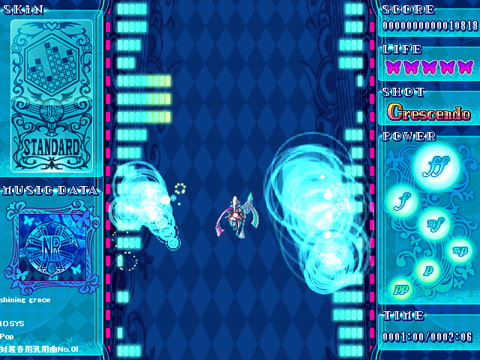
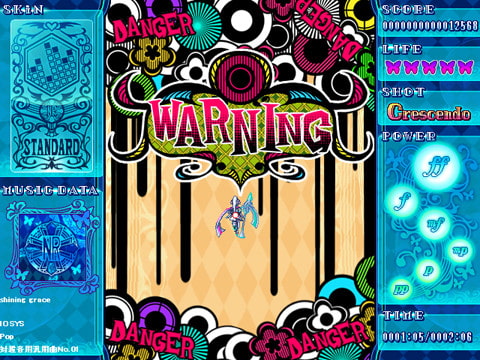
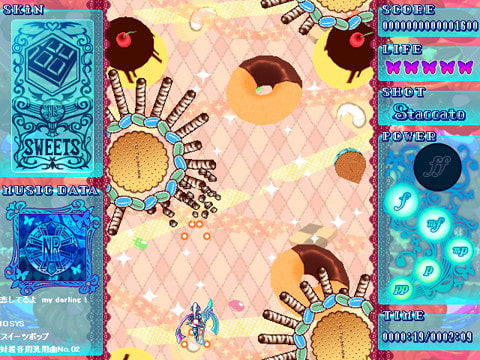
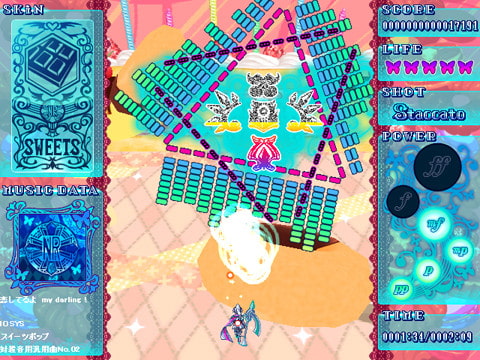
| Circle | Giza10 |
| Tags | シューティング |
| Price | 513円 |
Editorial Review
Project U-Ta-Hi-Me occupies a niche but increasingly confident territory: the rhythm-action hybrid that treats your personal music library as both content generator and mechanical constraint. It sits apart from traditional bullet-hell shooters by inverting the usual relationship between gameplay and audio—here, your song selection doesn’t just provide a soundtrack, it architecturally determines the entire encounter.
What distinguishes this work is its commitment to procedural integration. The promise that each MP3 or WAV file generates unique stage layouts and boss patterns suggests genuine algorithmic responsiveness rather than a gimmick. This is further elevated by the inclusion of IOSYS vocal tracks, which serve dual purposes: they anchor players unfamiliar with their own library while demonstrating how the system translates composition complexity into gameplay variety. The three distinct skins—Sweets, Gothic, and Rail—aren’t cosmetic padding but acknowledged variables that fundamentally alter aesthetic reception and, by extension, the psychological pacing of identical tracks. This modularity acknowledges that “the same track feels completely different” depending on visual framing, a surprisingly sophisticated understanding of how sensory layers interact.
The core loop hinges on boss confrontations timed to track endings, creating natural difficulty curves determined by song length and intensity rather than programmer discretion. This removes traditional difficulty settings in favor of a more organic, personally calibrated challenge.
This appeals specifically to players who already maintain curated music libraries and crave mechanically justified reasons to engage with their existing collections—particularly those fatigued by the decorative relationship between music and gameplay in conventional rhythm games. Casual shooters seeking passive engagement will find the feature-rich customization less relevant than hardcore rhythm-action enthusiasts.
Project U-Ta-Hi-Me succeeds at what it attempts: transforming personal music consumption into interactive spectacle without sacrificing mechanical coherence.
Get “Project U-Ta-Hi-Me” on DLsite
This Week’s Top Rankings:
Related Tags:
📖 How to buy on DLsite — step-by-step guide
💳 Payment methods for overseas buyers (Visa/MC declined?)
Interested? Get the free trial here ↓
![Acquired Unique Job [Breeding Uncle] [Complete Collection]](https://henhenta.com/wp-content/uploads/2026/10/RJ01722051-300x225.jpg)