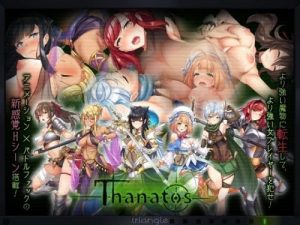
Synopsis
One day, __ met someone.
Guided by that person, __ met others.
Together, they created a place to belong.
But that place became known as a sanctuary where sinners live in apparent happiness.
“What do you think of this sin?”
—
There are 5 bad endings in this game.
Warnings will appear before each one, so please avoid them if you’re sensitive to bad endings.
However, you may glimpse the shadows each character carries.
Those whose memories fade away, the jester who smiles through pain, those whose hearts are bound by demons, those who keep absolute promises, those who cannot see their own path, those who cling to fragile hope.
Each ending is unique and distinct.
If this interests you, please experience it for yourself.


Editorial Review
Mitsu Domoe positions itself as a character-driven psychological dark fantasy where narrative fragmentation and protagonist ambiguity become design features rather than narrative quirks. In a crowded space of isekai and traditional fantasy VNs, this work’s commitment to psychological deterioration and moral ambiguity over conventional progression sets it apart from the more optimistic genre trends.
The work’s primary strength lies in its deliberate multiplicity of perspective. Rather than centering a singular protagonist’s journey, the game constructs meaning through five distinct bad endings, each tied to a specific character archetype—the amnesiac, the masked performer, the demonically bound, the oath-keeper, and the directionless wanderer. This modular approach to narrative collapse, where each ending reveals different shadow aspects of the cast, mirrors experimental visual novel design more common in Japanese indie circles than mainstream releases. The warning system for sensitive players suggests thoughtful consideration of content delivery, implying that these endings aren’t shock value but intentional explorations of psychological and emotional breaking points.
The vague protagonist positioning (indicated by the blank in “One day, __ met someone”) suggests either player-insertion mechanics or deliberate narrative unreliability—a choice that positions the work as more experimental than straightforward. Combined with tags emphasizing violence and the concept of a “sanctuary for sinners,” this creates a work less interested in resolution than in excavating why characters cling to false refuges.
This appeals most to players seeking character studies that refuse redemption arcs, who value psychological complexity over comfort, and who engage seriously with darker themes rather than seeking them superficially. The multiple-endings structure marketed around distinct character reveals suggests fans of route-based character study VNs may find deeper resonance here than genre newcomers.
A compact exploration of how broken people construct belonging—deliberately unsettling and narratively honest about what sanctuary conceals.
Get “Mitsu Domoe ~White Contract an” on DLsite
This Week’s Top Rankings:
Related Tags:
Fantasy | Serious | Multiple Endings | psychological | violence
📖 How to buy on DLsite — step-by-step guide
💳 Payment methods for overseas buyers (Visa/MC declined?)
Interested? Get the free trial here ↓