
Synopsis
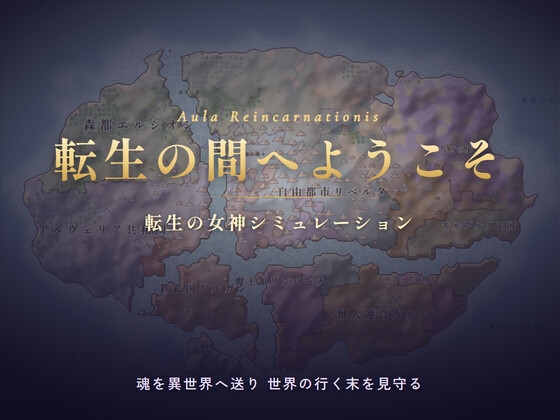
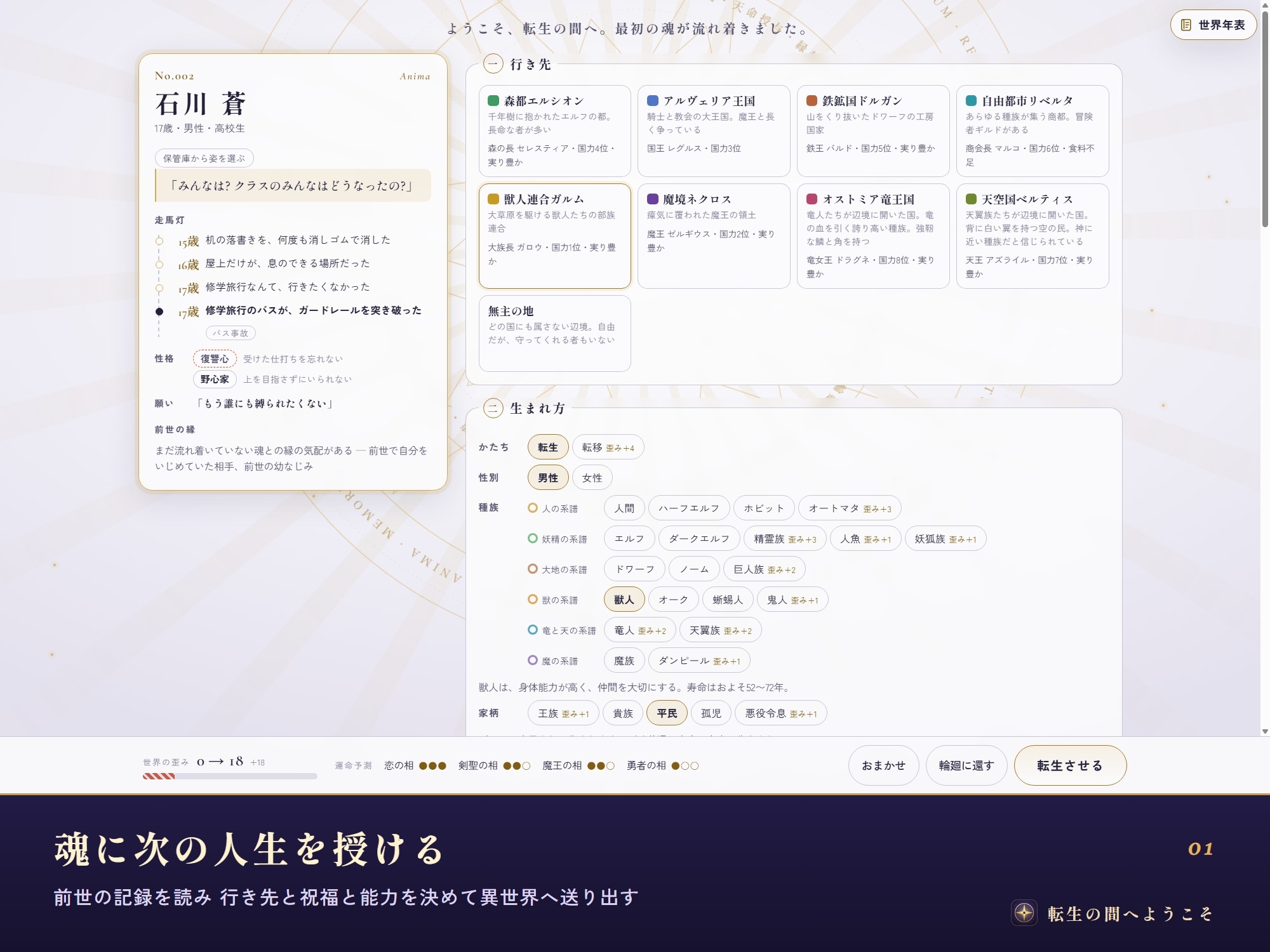
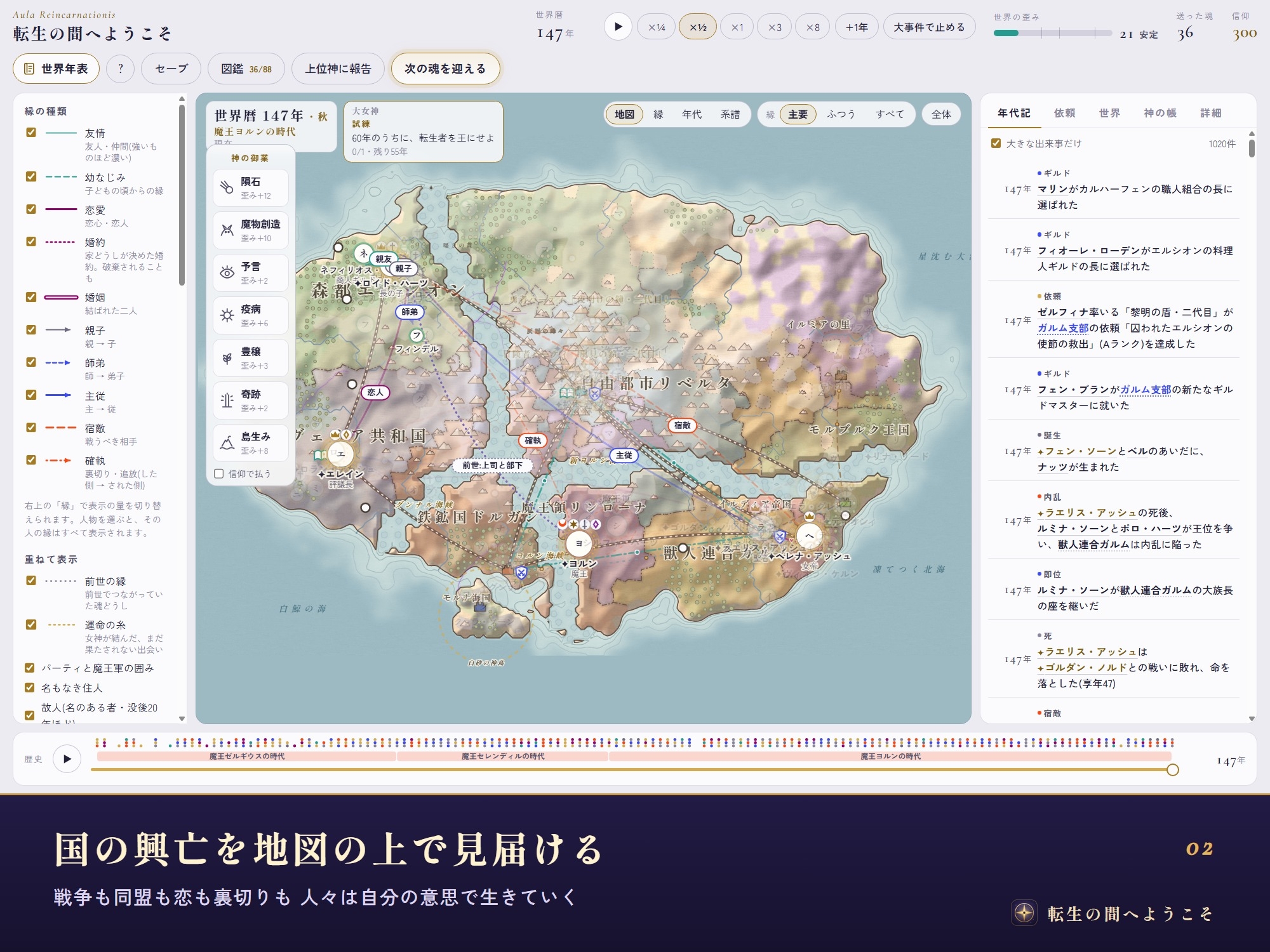
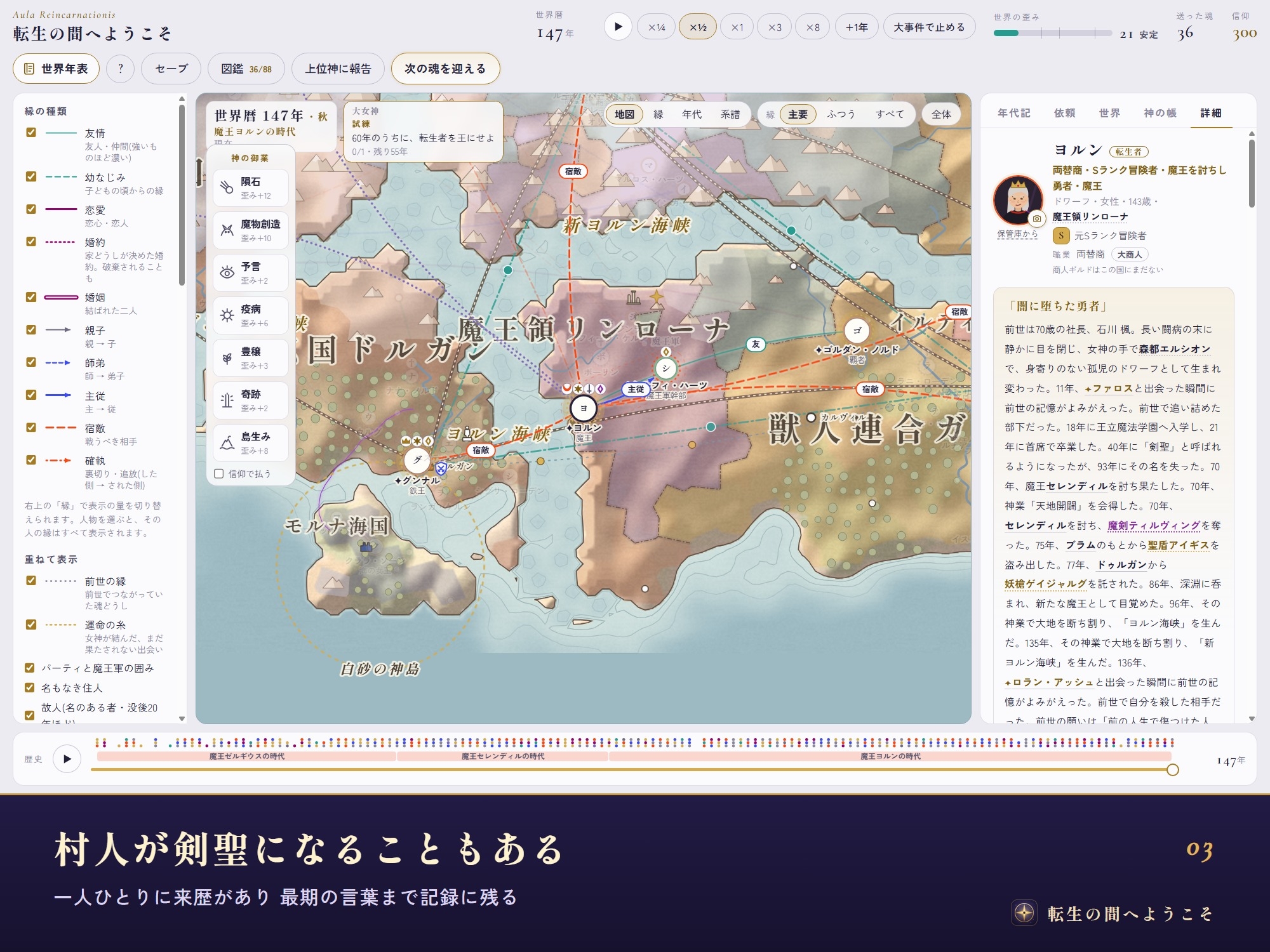
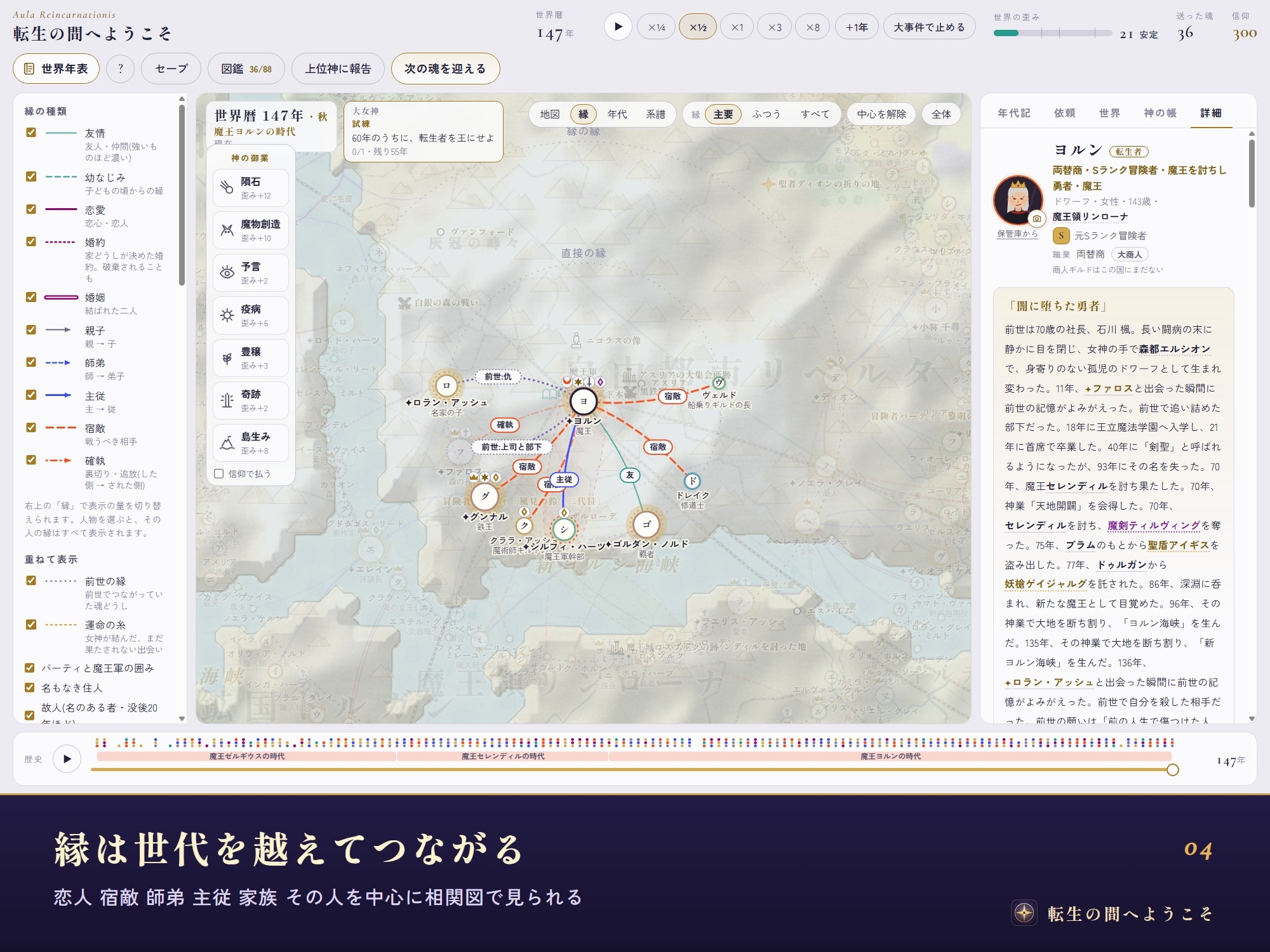
As a newly appointed Goddess of Reincarnation, you grant new lives to souls lost through overwork and accidents. You decide their destination country, race, social status, and blessings—celestial gifts that shape their destiny. However, each blessing warps the world; when distortion reaches 100, everything collapses. The souls you send forth live freely in another world, falling in love, adventuring, founding nations, or becoming demon lords. Villagers become sword saints; villainess become queens; rebels birth new kingdoms. You witness their lives and the world’s transformations across maps and relationship charts. With 20 races, 96 professions, and 12 guilds, the world moves independently—nations wage war, form alliances, experience succession crises and revolutions. As goddess, you wield seven divine arts: meteors, monster creation, prophecy, plague, abundance, miracles, and island genesis. Yet every power deepens world distortion. Six ultimate techniques reshape continents themselves. Each soul’s biography is recorded, creating an enduring legacy.
| Circle | ソロサークル |
| Tags | Simulation, Application, Japanese |
| Price | 467JPY |
Editorial Review
Godhood as systems design: Welcome to the Reincarnation Room positions itself as a deity management sim that trades narrative linearity for emergent storytelling across a living fantasy world. It’s closer to Dwarf Fortress or Creatures than traditional visual novels—a generative sandbox where your choices as a reincarnation goddess create cascading consequences rather than branching paths.
The game’s central tension is its defining feature: you allocate blessings to reincarnated souls (58 varieties, from “Hero’s Grace” to curse-bound powers that reduce world distortion), but every power granted destabilizes reality itself. Hit 100 distortion and the world collapses. It’s a brilliantly inverted resource management problem—abundance becomes catastrophe. The 20 races, 96 professions, and complex social simulation (romance, rival lineages, guild politics, succession wars) means your decisions propagate through generations, and souls that shared connections in past lives rediscover relationships across centuries. Modern knowledge from reincarnates literally engineers technological advancement, from mayonnaise to railways.
What distinguishes this from typical management games is the narrative density layered atop systems: individual character arcs crystallize into biographies with final letters, while macro-level events (demon lords rising, nations collapsing, new islands emerging) are tracked through newspapers and historical timelines. The seven divine miracles and “Saint Arts”—reality-warping techniques like continental fission—add kinetic spectacle to what could otherwise feel like spreadsheet gardening.
This appeals to players who treat simulation games as orchestrated emergent fiction, who want to feel world-building consequences without pre-written dialogue, and who enjoy the methodical pace of long-term strategic play. Aesthetic storytelling enthusiasts may find the reliance on logs and numerical abstractions too distant.
A genuinely original systems-first design that proves constraint-based gameplay can generate narratives as compelling as scripted ones.
Get “Welcome to the Reincarnation R” on DLsite
This Week’s Top Rankings:
Related Tags:
Japanese | Simulation | Application | Comics
📖 How to buy on DLsite — step-by-step guide
💳 Payment methods for overseas buyers (Visa/MC declined?)
Interested? Get the free trial here ↓
![Acquired Unique Job [Breeding Uncle] [Complete Collection]](https://henhenta.com/wp-content/uploads/2026/10/RJ01722051-300x225.jpg)