
Synopsis
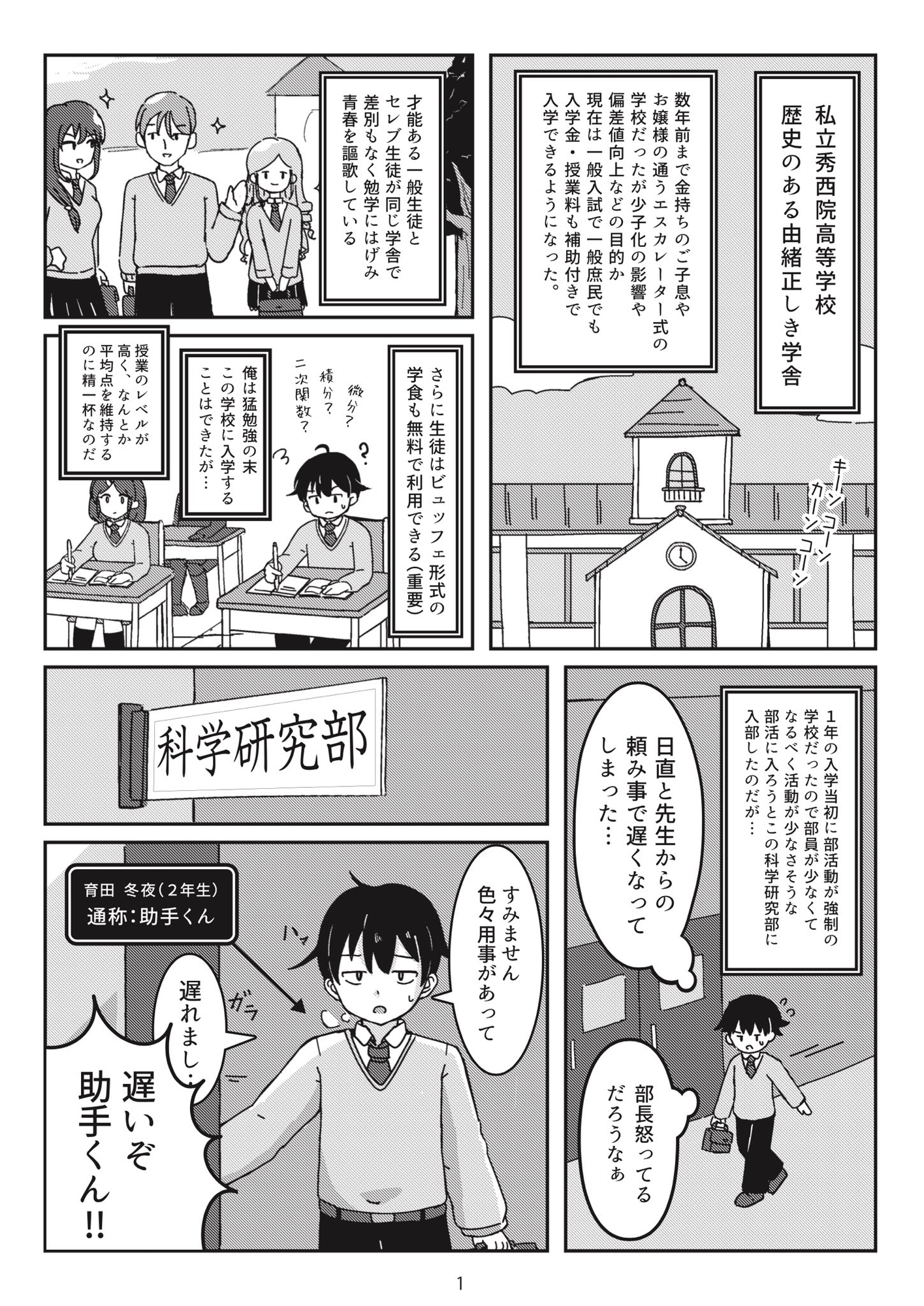
A genius inventor and the president of the Science Research Club at an elite high school switches bodies with her assistant during an experiment. This is the first part of a story featuring an intelligent young lady from a prestigious school who is passionate about inventions, as she and her club member assistant accidentally swap places through a failed scientific experiment. What hijinks and discoveries await them as they navigate life in each other’s positions?




| Circle | たまごかけりぞっと |
| Tags | Manga, JPEG, Japanese |
| Price | 550JPY |
Editorial Review
Body-swap narratives remain a reliable engine for comedic tension in manga, and this science club premise slots comfortably into that established tradition. What distinguishes this installment is its deliberate positioning as the first half of a longer arc—a structural choice that signals commitment to exploring the scenario’s implications rather than rushing toward resolution.
The setup hinges on class dynamics: a talented ojou-sama club president (the inventor type, per the synopsis) swaps bodies with her assistant member, immediately creating friction between their respective social positions and competencies. The science club setting justifies the swap through narrative logic rather than magical convenience, grounding the premise in a world where experimentation is both workplace and character motivation. This grounds the premise in a world where investigation and discovery drive both plot and character behavior. The tags emphasize this is manga content distributed as JPEG, suggesting straightforward presentation without complex layering or experimental visual effects—what you see is what you get, technically speaking.
For readers, the real appeal lies in watching how the two characters navigate each other’s worlds: the assistant suddenly occupying the ojou-sama’s social obligations and privileges, while the genius inventor confronts the reality of her helper’s daily grind. This role-reversal framework naturally generates both comedy and opportunity for character development, particularly if the narrative uses the body-swap as vehicle for mutual understanding rather than mere slapstick.
This works best for audiences who enjoy premise-driven manga with light comedic sensibilities and character-focused storytelling—readers comfortable with deliberate pacing who understand that part one exists to establish stakes, not resolve them. If you appreciate how constraint (the confined setting, the specific class difference) can generate narrative friction, this setup delivers exactly that foundation.
A solid execution of a well-tested formula, anchored by a premise with genuine room to breathe.
Get “Assistant-kun! The Experiment ” on DLsite
This Week’s Top Rankings:
📖 How to buy on DLsite — step-by-step guide
💳 Payment methods for overseas buyers (Visa/MC declined?)
Interested? Get the free trial here ↓
![Succubus Nightmare3 [English Version]](https://henhenta.com/wp-content/uploads/2026/10/RJ359564-300x225.jpg)