
Synopsis
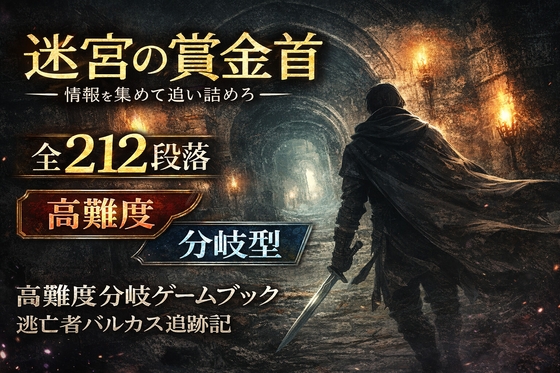
Chase down the fugitive Balkas.
But this labyrinth cannot be conquered by strength alone――.
▼Overview
This is a long-form branching gamebook playable in your browser.
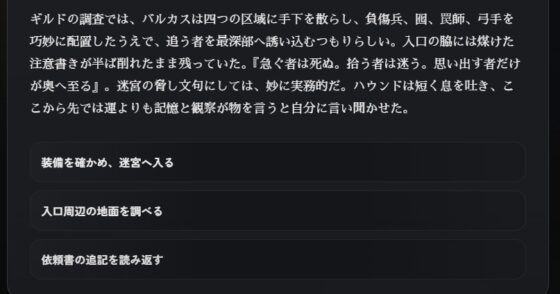
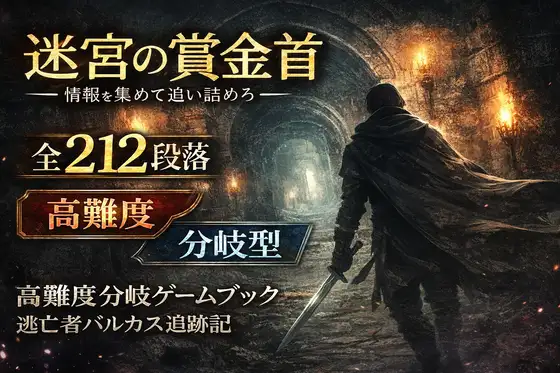
As a bounty hunter “Hound,” you will explore the intricate《Labyrinth of Oblivion》while pursuing the fugitive Balkas.
▼Features
■ Long-form structure with 212 total paragraphs
・Explore multiple routes to achieve victory
・Designed with multiple playthroughs in mind
■ Information gathering is key to success
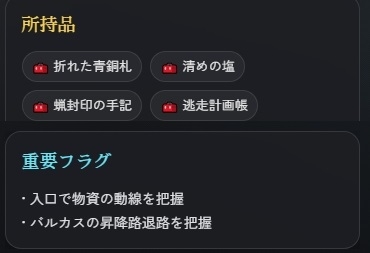
・Collecting intel, items, and setting flags will pay off later
■ High difficulty & strategic gameplay
・Easy to reach dead ends if you proceed carelessly
・Observation and memory are essential
■ Branching × Battle System
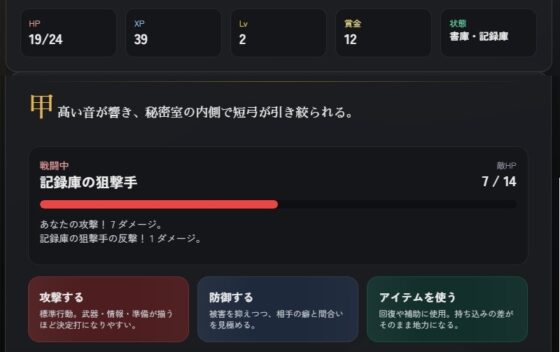
・Turn-based combat with Attack/Defense/Item selection
・Enemies grow stronger as you progress
■ Browser game with UI
・HP / XP / Level / Inventory display
・Save functionality
・Implemented for ease of play
▼Recommended for:
・Gamebook enthusiasts
・Fans of TRPG and exploration games
・Those who enjoy deduction, analysis, and information management
・Dark fantasy lovers
・Players seeking challenging gameplay
▼Demo version includes:
・Prologue
・Barracks route
・Sewers route (partial)
Chapel/Library/Deepest level unlocked in full version
*AI was used to assist with promotional images and thumbnails.*
Editorial Review
Bounty in the Labyrinth occupies a crowded niche—the browser-based gamebook with tactical elements—but executes with the kind of deliberate design that separates serious genre entries from dilettante efforts. It’s a pursuit narrative dressed in dark fantasy clothing, and the labyrinth setting functions less as atmospheric window dressing and more as a puzzle box where failure is consequence, not loading screen.
What distinguishes this from standard branching narratives is the marriage of information gathering to strategic necessity. The synopsis emphasizes that intel, items, and flags matter mechanically, not narratively—this isn’t a game that rewards curiosity with flavor text. Dead ends are genuine threats rather than rhetorical devices, which means your second and third playthroughs aren’t optional replays but required puzzle-solving rotations. With 212 paragraphs framing multiple victory routes, the work demonstrates architectural ambition. The integration of turn-based combat into a gamebook framework is technically competent, though the real test lies in whether escalating enemy difficulty creates meaningful tactical decisions or just inflates HP pools.
The UI implementation—visible inventory, leveling, save states—signals respect for player time, which is crucial for a work explicitly designed to be replayed. This practical design sensibility suggests developers who understand that browser-based gamebook players want friction from systems, not interface.
Target audience is laser-focused: players who’ve exhausted traditional TRPG offerings and want the deduction-heavy pacing of old-school solo adventure games but with modern quality-of-life features.
A smart execution of gamebook fundamentals for a specific but underserved audience. The branching structure and embedded puzzle logic will appeal to problem-solvers who treat replayability as a feature, not a bug.
Get “Bounty in the Labyrinth – Gath” on DLsite
This Week’s Top Rankings:
Related Tags:
Puzzle | Dark Fantasy | Strategy | exploration | browser game
📖 How to buy on DLsite — step-by-step guide
💳 Payment methods for overseas buyers (Visa/MC declined?)
Interested? Get the free trial here ↓
![Autumn Hot Spring Inn Secrets [Android]](https://henhenta.com/wp-content/uploads/2026/10/RJ01739664-300x225.jpg)
![[Smartphone Version] Elf’s Hole [Hurricane.com]](https://henhenta.com/wp-content/uploads/2026/10/RJ01690744-300x225.jpg)
![Patron Police [Smartphone Version]](https://henhenta.com/wp-content/uploads/2026/10/RJ01693588-300x225.jpg)
![Squeeze★Extraction Nightmare! [Mushaborareru Kibou]](https://henhenta.com/wp-content/uploads/2026/10/RJ01722380-300x225.jpg)
![Tower of Aldia [Smartphone Version]](https://henhenta.com/wp-content/uploads/2026/10/RJ01263861-300x225.jpg)
![Kingdom Knight Dad [Smartphone Version] | DLsite](https://henhenta.com/wp-content/uploads/2026/10/RJ01493524-300x225.jpg)