
Synopsis
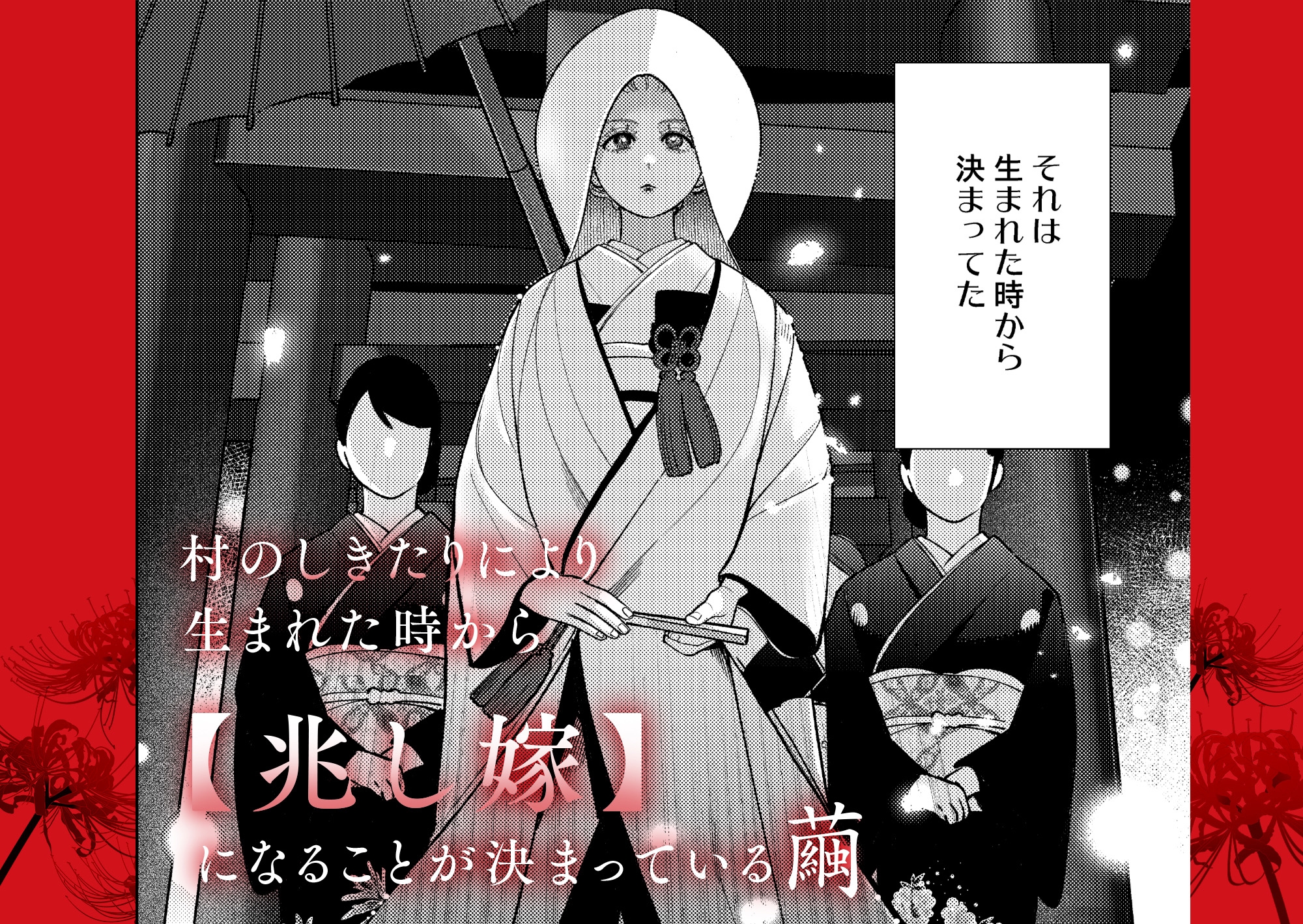
My fate was sealed from the moment of my birth by the village’s ancient laws.
A mysterious mark etched upon my body—one that will never fade.
It is the proof of being chosen as a special bride spoken of in legends passed down through generations of this land: a 【Harbinger Bride】.
My role is singular: to marry into the Mikage family, who have ruled this village for generations, and bear children to carry the bloodline into the future.
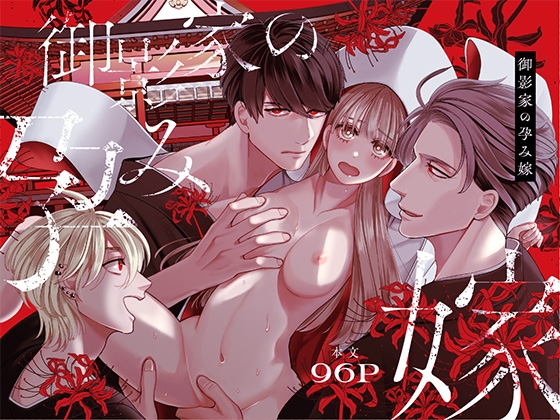
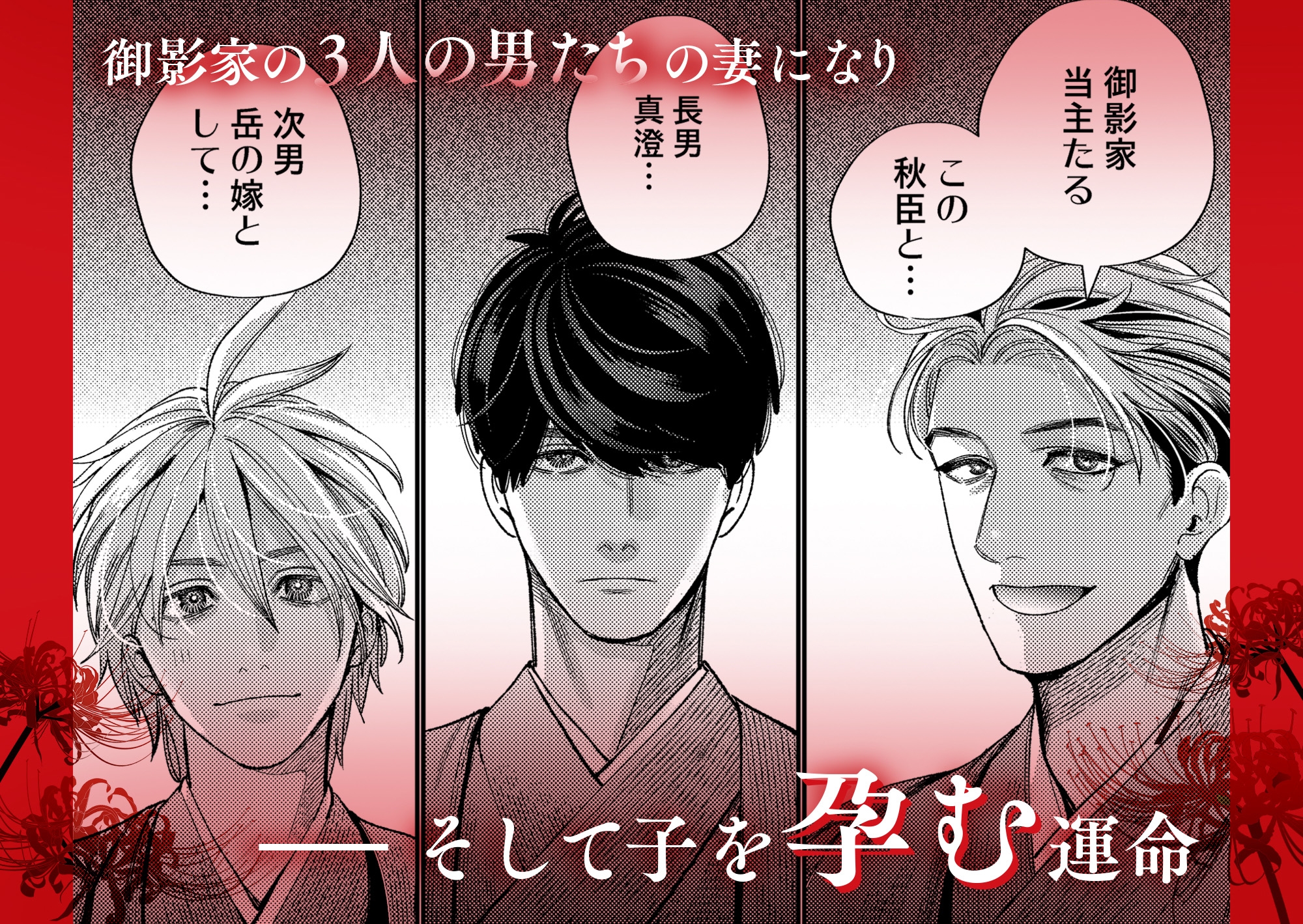
Waiting for Mayu at the Mikage mansion are three men: the patriarch Akiomi, eldest son Masumi, and second son Gaku.
The 【Harbinger Bride】 must become the wife of “all the men” of the Mikage family and conceive children for the clan’s sake. This is the immutable law of the village.
Within the mansion walls, Mayu finds herself ensnared by the gaze and obsession of three men. With no escape, her heart and body are slowly recolored in the hue of the Mikage household.
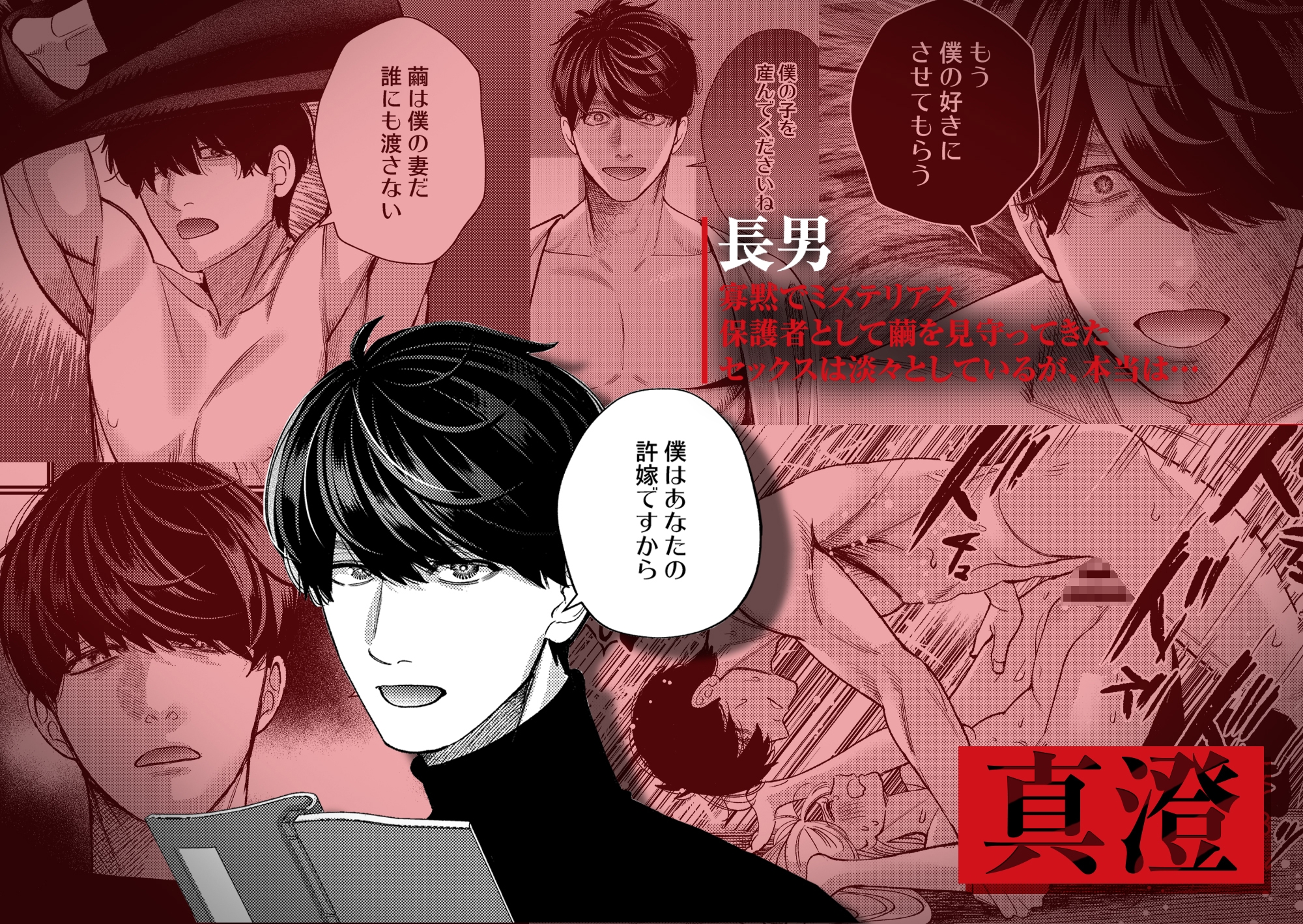
“Mayu is my wife. I won’t let her go to anyone else.” — Masumi, the reserved eldest son and folklorist whose obsession runs deeper than anyone’s.
“Everyone’s expecting me to violate you after all.” — Gaku, the affable second son concealing dangerous sadism behind his warm smile.
“The proof of my mission to ravish you completely…” — Akiomi, the patriarch whose gentle demeanor masks absolute dominion.
Village superstition, Mikage bloodline, and inescapable destiny. Surrounded by three men, Mayu gradually learns one truth: no one escapes from this house.
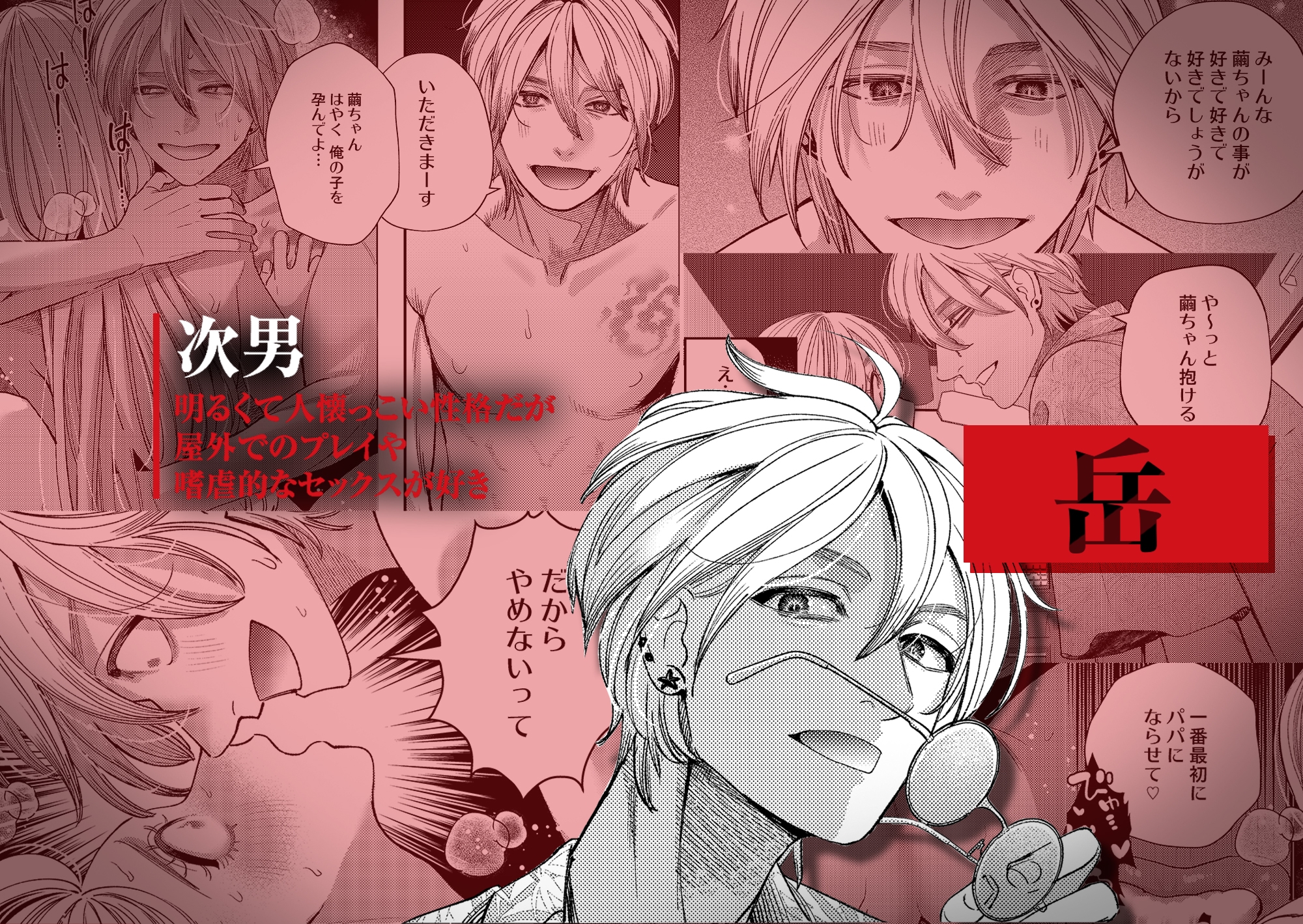
Get “The Pregnant Bride of the Mika” on DLsite
This Week’s Top Rankings:
Editorial Review
Dark fantasy breeding narratives with institutional coercion frameworks have grown increasingly sophisticated in the doujin space, and this entry positions itself squarely within that expanding niche—specifically targeting readers who seek elaborate world-building justifying non-consensual domestication scenarios. The “chosen bride” premise, anchored by the mark marking Mayu’s birth fate, elevates this beyond straightforward exploitation by grounding compulsion in mythological law rather than mere circumstance.
The Mikage household setup—three generational male figures (patriarch, two sons) sharing a single bride—creates a deliberately fractured intimacy dynamic that the synopsis hints at through Masumi’s possessive closing line. This tension between collective ownership and individual jealousy is the work’s structural core, suggesting psychological complexity beneath the surface-level group sex premise. The pregnancy tag functions not as incidental outcome but as thematic anchor: Mayu’s biological purpose becomes inseparable from her identity, a literalization of the “recolored” emotional transformation the synopsis promises. The inclusion of anal and bondage tags signals this isn’t domestic slice-of-life but rather sustained physical subjugation presented as inevitable cultural obligation.
The dark fantasy framing—complete with village law and generational legend—distinguishes this from contemporary rape-revenge narratives by refusing redemptive escape routes. Mayu doesn’t resist the system; she’s absorbed into it. This appeals specifically to readers drawn to psychological degradation arcs where the protagonist’s gradual acceptance of her role becomes the primary dramatic current rather than resistance against it.
This work succeeds most for audiences seeking elaborate justification systems for non-consensual scenarios paired with multi-partner dynamics and genuine character obsession rather than interchangeable male figures. The NTR framing elevates standard group sex into something more psychologically pointed: watching Mayu become property contested between men who theoretically should share her equally.
📖 How to buy on DLsite — step-by-step guide
💳 Payment methods for overseas buyers (Visa/MC declined?)
Interested? Get the free trial here ↓



![[Sampler] How a Lonely Vampire Reclaims His Reincarnated Fiancée ~An Obsessive Love Spanning 300 Years~](https://henhenta.com/wp-content/uploads/2026/09/RJ01114970-300x225.jpg)