
Synopsis
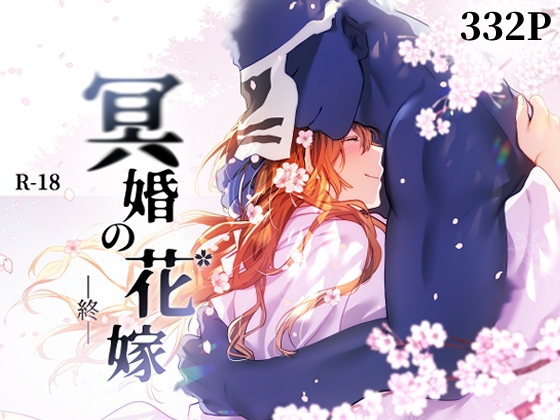
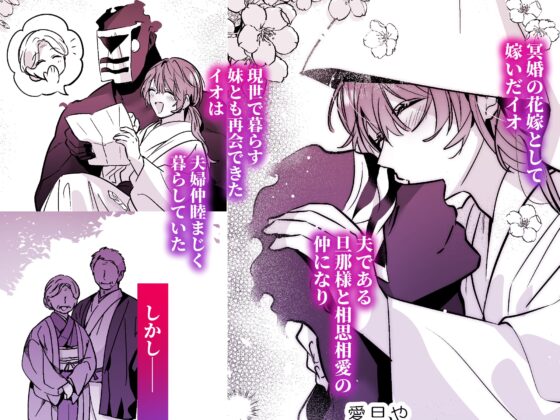
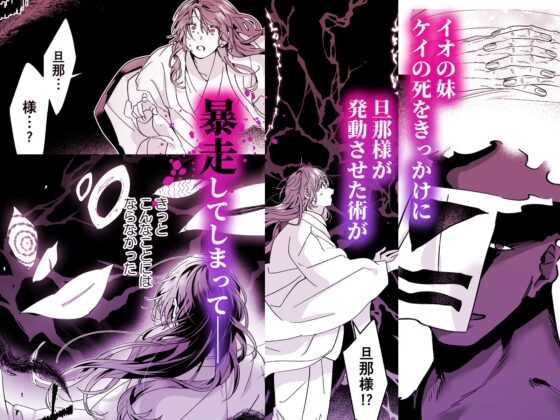
Io married her husband through a supernatural union, and the two grew to understand each other deeply, sharing peaceful days together. However, when news of her sister Kei’s death reaches them, her husband’s behavior becomes strange…
“I found a way to go back in time.”
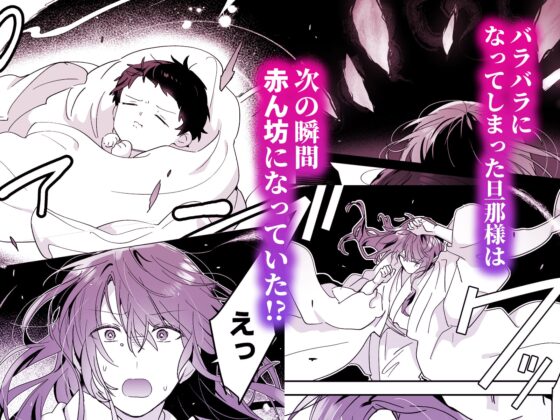
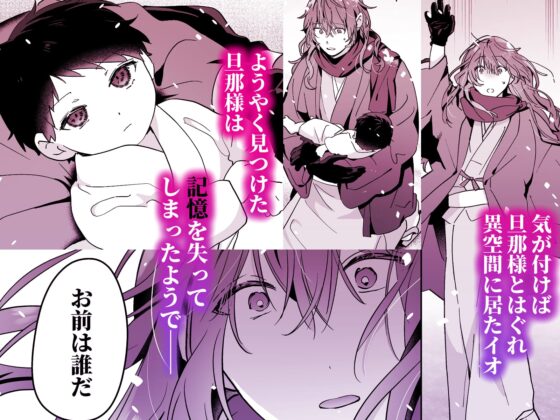
The spell her husband reveals to return to the past spirals out of control unexpectedly. Caught in the magic’s chaos, Io suddenly realizes that standing before her is not her beloved husband, but a small infant staring at her with cold eyes.
To restore her husband to his original self, Io begins a journey through a strange dimension alongside her husband, who has lost his memories. As she gathers fragments of his scattered memories, he gradually grows larger—but also increasingly arrogant and difficult.
His love for Io clashes with jealousy and resentment toward his former self. With each recovered memory, these conflicting emotions overflow. A deep rift forms between them, and her husband forcibly embraces Io…
When her husband finally regains all his memories, will he distance himself from Io?
The final chapter of the “Bride of the Underworld” series—a last love story where a couple truly understands each other and becomes one.
Get “The Bride of the Underworld – ” on DLsite
This Week’s Top Rankings:
Editorial Review
A supernatural redemption arc that weaponizes memory loss and time magic as emotional torture, “The Bride of the Underworld: Final Chapter” positions itself as the culmination of an established relationship dynamic—but uses that intimacy as a pressure point rather than comfort. In the current BL landscape dominated by meet-cutes and power-dynamic reversals, a narrative centered on a married couple *already bonded* who must rebuild trust through fragmented recollection is genuinely distinctive.
The work’s central conceit is deceptively cruel: the husband’s regression to infancy combined with memory loss creates a scenario where physical and emotional dependency invert. He grows larger and more volatile as memories return, his resentment toward his former self poisoning what should be rekindling affection. This generates genuine psychological tension—the wife cannot simply love the man she married because he’s becoming someone increasingly hostile and alien with each restored fragment. The tags indicate the narrative refuses easy reconciliation; jealousy, resentment, and forcible physical contact suggest the redemption arc includes genuine violation and boundary fracture, not just misunderstanding.
What distinguishes this from standard supernatural angst is the specificity of the emotional mechanism: memory isn’t just plot scaffolding but weaponized intimacy damage. The sister’s death triggering the temporal cascade adds mortality stakes that elevate beyond typical romantic complications.
This is essential reading for audiences specifically interested in how supernatural frameworks can deconstruct the “true love conquers all” fantasy—particularly those drawn to darker romantic dynamics where reconciliation requires navigating genuine harm alongside genuine love. Readers seeking conventional comfort narratives should look elsewhere. For those invested in emotionally complex, destabilizing takes on married intimacy tested through magical catastrophe, this delivers precisely calibrated psychological unease wrapped in fantasy mechanics.
Related Tags:
Fantasy | romance | supernatural | Time travel | married couple
📖 How to buy on DLsite — step-by-step guide
💳 Payment methods for overseas buyers (Visa/MC declined?)
Interested? Get the free trial here ↓