


Synopsis
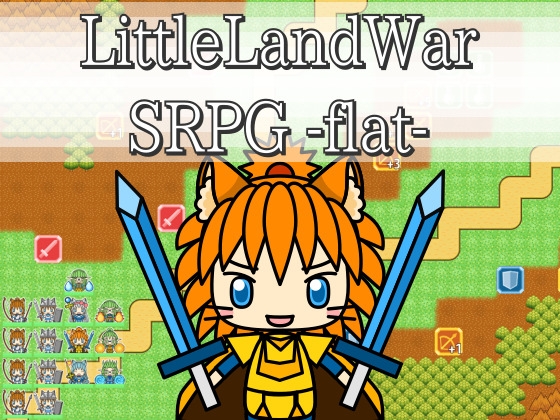
This is a Simulation RPG set in a fantasy world with simple, intuitive controls and smooth gameplay progression. The game features 20 stages for extended playtime.
Read more
Some stages randomize terrain and unit placement with each playthrough, allowing for arena-style experience grinding.
Characters are rendered in flat style consistent with previous titles and created without AI image generation. The story follows Leo and Mimi, military academy students tasked by the queen to suppress a rebellion led by graduates allied with demons. They must befriend ancient peoples to achieve victory in frontier battles.
The system features turn-based combat where players command all units before ending their turn. Victory requires defeating all enemy commander units (marked with ★), while losing even one allied commander results in defeat. Units include named unique characters and generic job-class units, both gaining abilities and stat increases through growth. Clearing stages may unlock additional unique units.
| Circle | Ruten No Oheya |
| Tags | Simulation, Music, Application, Japanese, English |
| Price | 1,650JPY |
Editorial Review
Tactical strategy games with streamlined accessibility remain a reliable niche in the doujin market, and Little Land War SRPG -flat- positions itself squarely in that territory with an emphasis on pacing and replayability over complexity. The fantasy setting and rebellion narrative are familiar scaffolding, but the mechanical choices here—turn-based progression you can accelerate, procedurally shifting stages for grinding, and a roster that expands with campaign completion—signal a developer more interested in sustained engagement than narrative spectacle.
The most distinctive element is the deliberate visual approach: flat character design without generative AI, which reads as a statement of craft in an era where efficiency shortcuts dominate indie production. This aesthetic choice matters because it signals hand-drawn consistency across all twenty stages, establishing visual coherence that AI-assisted works frequently struggle with. The unit progression system splitting unique named characters and generic job-classed soldiers is standard fare, but the promise of roster expansion through stage clearance provides incremental discovery that extends beyond a single playthrough. The procedural stage variation for select missions transforms grinding from tedium into a quasi-roguelike activity, a practical solution to the replayability problem many tactical RPGs face.
Mechanistically, the turn-skip functionality (accessible directly from the menu rather than forcing animation waits) demonstrates understanding of player friction—this is design that respects your time. The victory condition demanding elimination of all enemy commanders while protecting your own keeps stakes clear and tactical options focused.
This appeals most to players seeking strategy depth without overwhelming rules overhead, particularly those who appreciate Japanese doujin sensibilities around character design and who don’t require voice acting or elaborate cinematics. Seasoned tactical RPG veterans might find twenty stages modest, but the replayable mission structure suggests reasonable value extraction for the intended audience.
Fundamentally, a competent tactical SRPG that knows its scope and executes it without pretension.
Official English version available ↓
Get “Little Land War SRPG -flat-” on DLsite
English Version → Free TrialJapanese Original
This Week’s Top Rankings:
Related Tags:
English | Japanese | Application | Simulation | Music