
- Tags


Synopsis
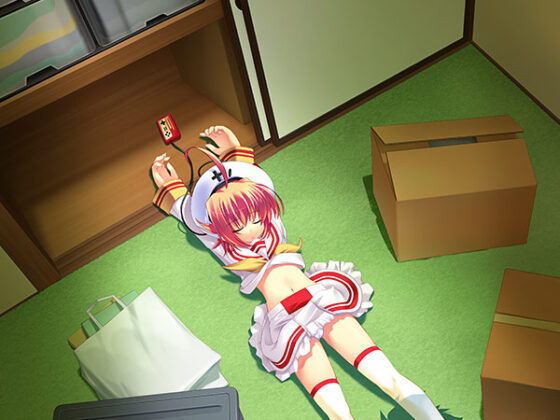
One day, protagonist Shidou Yuuichi accidentally breaks Yuki, his personal home game console doll. Unable to afford repairs, he sneaks into the forbidden room of his house and discovers something nostalgic in the closet—the world’s first consumer doll, a legendary monument of otaku culture that made the world say “Japan started it all.” Its name is Miko.
Yuuichi tries to power it on, but there’s no switch where there should be. According to the manual, Miko activates with a kiss. What kind of dreams did they pack into this thing?
On a whim, he follows the instructions. The power turns on, and Miko awakens after over a decade of silence. A small change occurs in Yuuichi’s mundane daily life. But from here, the situation surrounding them begins to shift, bit by bit. What awaits them beyond this point? What fate lies in store?
In a near-future Japan, home game consoles clash in spectacular fashion! In this world, battling game consoles against each other has become wildly popular. Brace yourself for a story packed with gags, non-stop action, and heartwarming moments—a tale for everyone who loves games!
Editorial Review
Pico Pico occupies an increasingly crowded niche: the robot-girl cohabitation visual novel with light battle mechanics. What distinguishes it from the standard template is its self-aware fixation on obsolescence and nostalgia. Rather than positioning the protagonist’s doll companion as cutting-edge technology, the narrative deliberately resurrects a “legendary monument of otaku culture”—a first-generation console doll whose activation method (a kiss, naturally) doubles as both worldbuilding conceit and narrative hook. This deliberate clash between the protagonist’s modern life and Miko’s decade-long dormancy suggests the work understands its own place in a lineage of Japanese tech-fetish fantasy.
The battle system appears functional rather than central; the synopsis emphasizes console duels without detailing mechanical depth, which is typical of visual novels that treat combat as scenic punctuation rather than strategic core. The cohabitation dynamic—protagonist and robot girl sharing a household—is rendered through the standard romance-comedy lens, though Miko’s outdated origins theoretically create room for fish-out-of-water comedy that genre entries often neglect. The school uniform tag suggests at least one character design direction, though the sci-fi setting and near-future Tokyo backdrop imply visual variety beyond typical high school settings.
The “Romantic Feelings Sleep” subtitle hints at thematic interest in dormancy and reactivation that extends beyond the literal power-on moment, potentially elevating this above straightforward wish-fulfillment fare. However, the synopsis cuts off mid-sentence, leaving the actual narrative scope unclear—whether this explores genuine relationship development or settles for surface-level interaction.
Best suited for players who value nostalgic framing and robot-girl aesthetics over mechanical complexity, and who appreciate that specific strain of Japanese pop-culture self-reference. A solid entry point into console-doll romance if the antiquated-technology angle appeals, though not groundbreaking within the subgenre.
Interested? Get the free trial here ↓
This Week’s Top Rankings:
Related Tags:
visual novel | school uniform | Sci-Fi | battle | Cohabitation