Synopsis
The Seventh Republic—a nation shunned by the sun.
Having lost daylight in a devastating past war, this country is now plagued by heinous criminals and unseen shadows.
The National Police Agency stands as the protector of citizens and beacon of justice against such darkness.
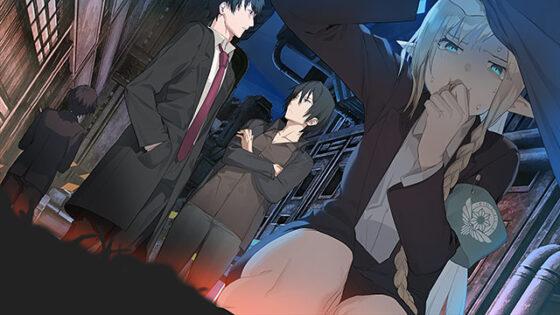
The protagonist Luka Hichiryuu works in Division Thirteen (colloquially known as “Hakosum”), a section of the police force where troublemakers and problem children congregate.
Amidst uneventful days, Luka secretly investigates the “Cult Incident” from years past.
Then, new members join Division Thirteen, and a turning point arrives.
Rumors circulate through the police force of a mysterious entity known as the “Alliance of Radiance.”
As various powers scheme in the shadows, the fate of Luka, Division Thirteen, and the entire police organization awaits…
*Prequel: Meteor World Actor available here!




Editorial Review
Meteor World Actor: Badge & Dagger plants itself squarely in the literary-driven sci-fi mystery space that’s become increasingly sophisticated within the doujin visual novel market. As a kinetic novel sequel, it forgoes player choice entirely to commit fully to narrative momentum—a risky but increasingly deliberate choice among ambitious indie creators unwilling to compromise pacing for branching complexity.
What distinguishes this work is its commitment to institutional worldbuilding. The Seventh Republic’s perpetual darkness functions not as mere aesthetic window-dressing but as the political and psychological foundation for everything: a police state apparatus, citizen desperation, and the moral ambiguity that comes with investigating shadowy conspiracies in compromised systems. Division Thirteen itself—that deliberate dumping ground for troublemakers—becomes the narrative engine, allowing the story to explore both procedural investigation and character dynamics without pretending institutional logic doesn’t matter. The layering of mysteries (the “Cult Incident,” the “Alliance of Radiance,” and the larger political machinery) suggests a work that trusts its audience to track interconnected threads across a larger fictional landscape, particularly given its positioning as a sequel.
Heliodor’s approach here appears to favor atmospheric tension and character-driven reveals over shock moments. The sci-fi veneer combined with police procedural structure appeals to readers who want adult sophistication—moral compromise, institutional corruption, shadowy agendas—without relegating those themes to background noise. The combination of kinetic novel pacing with mystery and sci-fi worldbuilding remains relatively uncommon in the English-language doujin space, where most story-driven works either branch extensively or drift toward pure character focus.
This is fundamentally for readers who value narrative architecture, institutional intrigue, and the willingness to sit through a predetermined story if that story respects their intelligence. Skip it if you demand player agency or prefer character-focused storytelling over plot machinery.
This Week’s Top Rankings:
Related Tags:
Sci-Fi | Mystery | ADV | Story-Driven | R18 Games
📖 How to buy on DLsite — step-by-step guide
💳 Payment methods for overseas buyers (Visa/MC declined?)
Interested? Get the free trial here ↓