
Synopsis
“Do you believe in fate?”
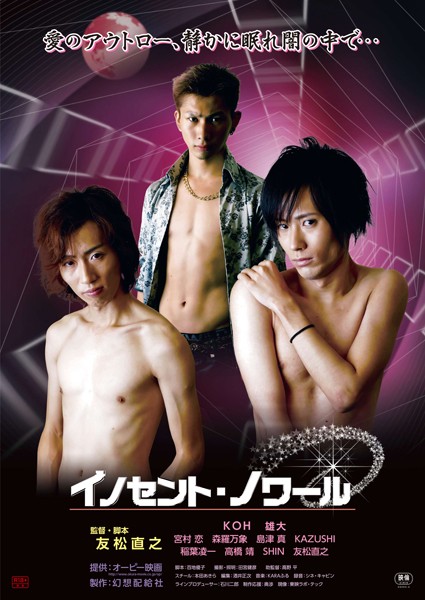
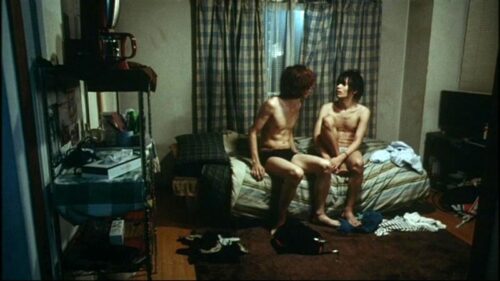
Yoshiki meets Teru, who works at a uri-sen snack bar. Despite it being their first encounter, Teru brings Yoshiki back to his apartment and they share an intimate moment. Yoshiki experiences an ecstasy like never before. Soon, the two begin talking about living together in the countryside by the sea, but…



Editorial Review
Innocent Noir positions itself as a deliberately paced gay drama that privileges psychological intrigue and atmosphere over narrative momentum—a deliberate counterpoint to the faster-paced BL doujin work trends dominating the space. The 60-minute runtime signals intent toward character study rather than plot-heavy storytelling, and the “Taisho Eiga” tag (invoking classical Japanese silent film aesthetics) suggests this work is reaching backward to build something more contemplative than contemporary output typically allows.
What distinguishes this entry is its commitment to noir tonality applied to intimate queer narrative. The setup—immediate physical attraction followed by domestic fantasy, then an implied rupture—traffics in classic noir’s seduction-into-darkness framework, but the work appears genuinely interested in exploring how desire and fate intertwine for its male characters rather than simply using them as vehicles for transgression. The presence of multiple credited creators (including Makoto Shimazu and Naoyuki Tomoematsu) suggests collaborative direction that likely prevents the work from falling into solipsistic character study; there’s visual and narrative craft here operating at a higher register than routine production.
The uri-sen snack bar setting is notably specific—a liminal space between public and private, service work and intimacy—and the countryside-by-the-sea fantasy suggests the work is examining escape fantasies and their inevitable collision with reality. This thematic sophistication paired with the classical film reference positioning marks it as doujin work aimed at viewers fatigued by conventional romance beats.
This appeals most to audiences comfortable with ambiguity, atmospheric tension, and character work that values mood over resolution—specifically those drawn to queer cinema that trusts viewers to sit with melancholy rather than resolve it neatly.
A rare doujin work work that applies noir sensibility to intimate queer drama without cynicism or camp, letting its 60-minute span breathe with genuine atmospheric pressure.
This Week’s Top Rankings:
Related Tags:
Gay | 60 Minutes | VR
📖 How to buy on DLsite — step-by-step guide
💳 Payment methods for overseas buyers (Visa/MC declined?)
Interested? Get the free trial here ↓