
Synopsis
It all began with a single journal. Inside a handwritten diary he’d obtained by chance was a map—a village that existed nowhere on any map. There, surrounded by a forest blazing an impossible crimson, lay Kimachi Village, a remote mountain settlement where camellia blooms out of season and leaves turn red too early. The young man is welcomed to this place as a “marebito”—a visiting deity.
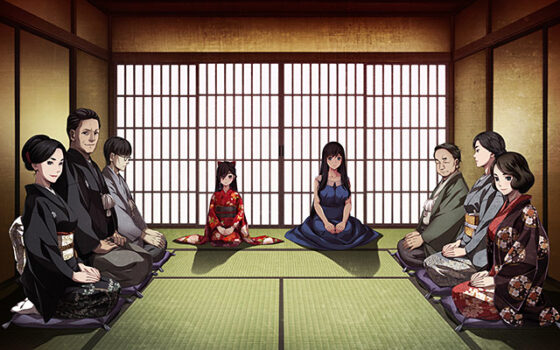
“Welcome, honored guest. Omeguri-sama. This year’s festival is a special grand ritual held once every twenty years. These maidens have been raised as ‘itsuki’—sacred vessels—for the visiting deity who arrives in this momentous year. Each night, two of them will attend to you in service. It is an ancient sacred ritual: to offer the village’s most beautiful daughters as temporary wives to the visiting god. A holy act of divine hospitality.”
What secrets does this village harbor?



Editorial Review
Erewhon positions itself in the intersection of folk-horror narrative and adult visual novel, territory where works like *Higurashi* proved atmospheric dread could sustain extended engagement. What distinguishes it here is the deliberate harvesting of Shinto cosmology—the marebito archetype, itsuki priestesses, the twenty-year cycle—as both structural framework and thematic engine rather than mere set dressing.
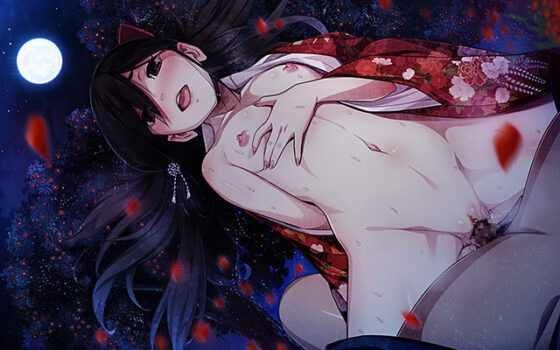
The artwork’s reputation for beauty operates in direct counterpoint to the psychological thriller substrate. This tension between aesthetic refinement and folk-horror unease is the work’s primary distinctive feature. The rural setting isn’t pastoral retreat but claustrophobic observation point: a village where seasonal cycles break their own rules, where camellia blooms betray natural order. The journal-as-gateway framing device suggests metanarrative awareness—the protagonist enters not just a place but a documented myth, one that’s already been written down. Combined with the twenty-year ritual cycle tag, the structure implies cyclical horror rather than linear narrative, where the player-character exists as one iteration in something much older.
The “miko priestess” tag carries specific weight here. These aren’t ancillary characters but the conceptual center: designated sacred vessels whose subjectivity the narrative must grapple with. Whether Erewhon treats them as fully realized individuals or symbolic objects will determine whether this transcends generic sex-game territory into actual psychological complexity.
This appeals specifically to players who value atmospheric horror architecture, Japanese mythology literacy, and slow-burn dread over immediate gratification. It’s for readers who’ve exhausted standard visual novel pacing and want their adult content embedded in legitimate narrative tension.
Erewhon proves that folk-horror substrate and adult content aren’t inherently incompatible—they can amplify each other when the narrative commits to psychological discomfort as thematic core rather than pretext.
This Week’s Top Rankings:
Related Tags:
Psychological Thriller | Rural setting | beautiful artwork | R18 Games
📖 How to buy on DLsite — step-by-step guide
💳 Payment methods for overseas buyers (Visa/MC declined?)
Interested? Get the free trial here ↓
![Autumn Hot Spring Inn Secrets [Android]](https://henhenta.com/wp-content/uploads/2026/10/RJ01739664-300x225.jpg)
![[Smartphone Version] Elf’s Hole [Hurricane.com]](https://henhenta.com/wp-content/uploads/2026/10/RJ01690744-300x225.jpg)
![Patron Police [Smartphone Version]](https://henhenta.com/wp-content/uploads/2026/10/RJ01693588-300x225.jpg)
![Squeeze★Extraction Nightmare! [Mushaborareru Kibou]](https://henhenta.com/wp-content/uploads/2026/10/RJ01722380-300x225.jpg)
![Tower of Aldia [Smartphone Version]](https://henhenta.com/wp-content/uploads/2026/10/RJ01263861-300x225.jpg)
![Kingdom Knight Dad [Smartphone Version] | DLsite](https://henhenta.com/wp-content/uploads/2026/10/RJ01493524-300x225.jpg)