
Synopsis
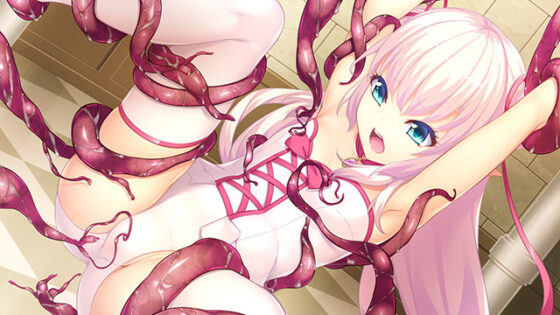
In a world where elves and humans coexist, the High Elves of the ruling class govern as pontiffs. The people prospered through ancient relics, but a goblin clan sought to seize their power. Led by the Goblin Shaman Zodom, who wielded the power of “machinery,” they attacked the Holy Kingdom with mechanical beasts. When conventional weapons proved useless, the princess sisters were called upon as shrine maidens and granted rings and new divine power. The two sacred battle maidens repelled the goblin threat while protecting their people in secret.
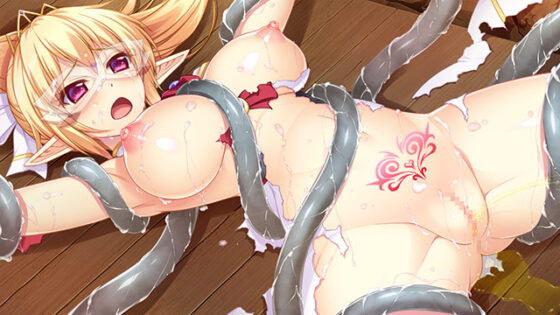
Years later, Cardinal Geldulf harbors vile ambitions to seize the kingdom. In secret alliance with the goblin clan, he schemes to make the noble elf princesses his own. Through Geldulf’s treachery, lust marks are inscribed upon the princesses’ bodies. Their flesh transforms obscenely, and they gradually lose their divine warrior powers. In the merciless depths of depravity, the princesses become Argus Slaves, their noble hearts betrayed as their bodies fall into ruin.



Editorial Review
Divine Shell Warrior Argus Slave positions itself squarely in the transformation corruption subgenre—specifically the high-status-to-degradation fantasy that has gained traction in recent years. Where most works in this space lean heavily on mechanical narrative scaffolding, this entry distinguishes itself through an explicit focus on systematic power erosion paired with body modification as the mechanism of fall.
The framework here is familiar: magical girls/warrior priestesses betrayed, marked, corrupted. What sets this apart is the specificity of the degradation architecture. The “lust marks” function not as mere cosmetic overlays but as active vectors of power loss—the marks literally consume divine authority as they spread across the protagonists’ bodies. This creates a dual-track humiliation that operates on both physical and political levels. The elf princess sisters lose agency through bodily transformation while simultaneously losing their functional role as protectors, compounding the shame. The involvement of the goblin clan adds a xenophobic dimension to the fantasy that complicates the typical “internal betrayal” narrative; the corruption is both personal (Cardinal Geldulf’s conspiracy) and existential (a conquered enemy seeking dominion).
Ozawa Yuki and saxasa’s involvement signals attention to character art during transformation sequences—a critical execution point for this subgenre, where the visual degradation must feel progressive and specific rather than generic.
This appeals most strongly to players seeking prolonged, systematic corruption narratives with clear power dynamics and visual documentation of moral/physical decline. The emphasis on noble status and its systematic dismantling suggests appeal to those interested in caste-based humiliation specifically.
A technically proficient execution of the high-status-to-slavery corruption fantasy, distinguished by mechanized power loss and dual-layer degradation. Delivers what its premise promises.
This Week’s Top Rankings:
Related Tags:
humiliation | tentacles | adult content | Windows 10/11 | transformation heroine
📖 How to buy on DLsite — step-by-step guide
💳 Payment methods for overseas buyers (Visa/MC declined?)
Interested? Get the free trial here ↓
![Autumn Hot Spring Inn Secrets [Android]](https://henhenta.com/wp-content/uploads/2026/10/RJ01739664-300x225.jpg)
![[Smartphone Version] Elf’s Hole [Hurricane.com]](https://henhenta.com/wp-content/uploads/2026/10/RJ01690744-300x225.jpg)
![Patron Police [Smartphone Version]](https://henhenta.com/wp-content/uploads/2026/10/RJ01693588-300x225.jpg)
![Squeeze★Extraction Nightmare! [Mushaborareru Kibou]](https://henhenta.com/wp-content/uploads/2026/10/RJ01722380-300x225.jpg)
![Tower of Aldia [Smartphone Version]](https://henhenta.com/wp-content/uploads/2026/10/RJ01263861-300x225.jpg)
![Kingdom Knight Dad [Smartphone Version] | DLsite](https://henhenta.com/wp-content/uploads/2026/10/RJ01493524-300x225.jpg)