
Synopsis
Following an asteroid impact on Earth, the “People’s Republic of Japan” collapses, leaving the Japanese archipelago fractured and embroiled in civil war. Multiple factions emerge: the “Japanese Empire” ruling Tokyo and Kyushu, the “Sendai Republic” occupying Saitama and Gunma, and the “Kinai Military Clique” controlling the Kansai and Chugoku regions.
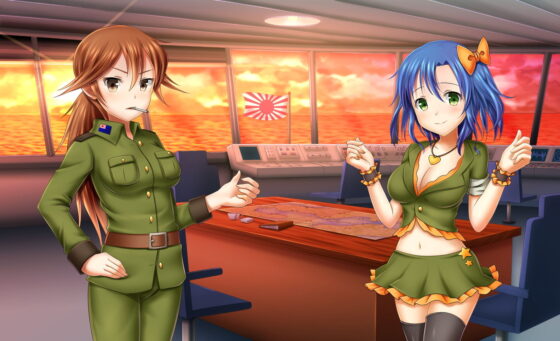
Yoshino Sumire, Prime Minister of the Japanese Empire’s Western Kaidou Government, commands Kyushu’s administration and military. She opposes the Kinai Military Clique over territorial disputes in the Suo and Nagato regions, but seeks to avoid war through diplomacy. However, Tokyo and Kyushu’s military bureaucrats unilaterally launch an amphibious assault on Suo Yashiro Oshima, forcing open conflict with the Kinai forces.
Faced with this unwanted war, Prime Minister Yoshino enters emergency military council with staff including Hasuike Natsuki, while preparing for joint operations with their American allies.
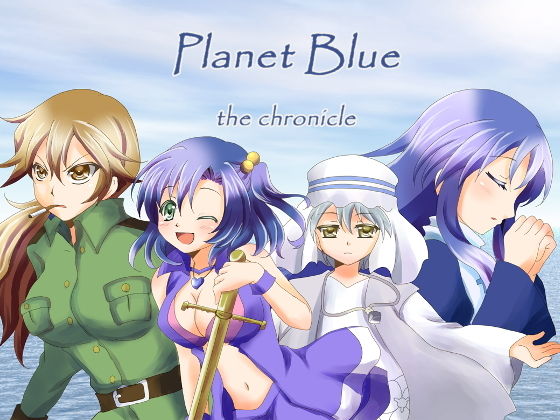
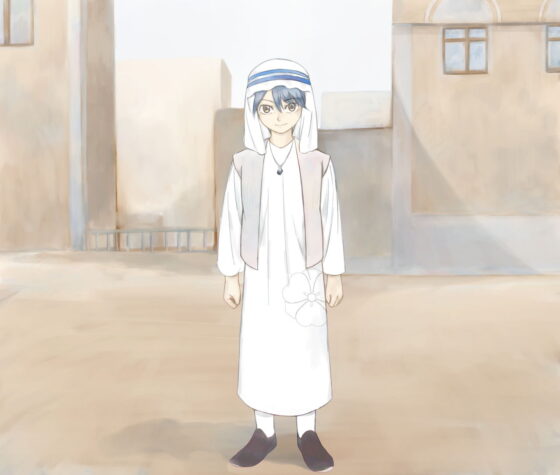
Meanwhile, Ukita Kiyozane, the Kinai Military Clique’s strategist guarding the Sanin and Sanyo regions, mobilizes his Muslim networks to orchestrate the next holy war. Elsewhere, Suzaki Yuuna, a priest of the Japanese National Church sent as a peace envoy, is guided toward the Seto Inland Sea—the archipelago’s Mediterranean—alongside a young female knight from a mysterious convent.
As war spreads across the land, a rare epoch of chaos emerges, shrouded in shadowy confusion. Can we witness the end of this war and survive?
Editorial Review
Planet Blue Chronicle positions itself as a post-apocalyptic military visual novel grounded in geopolitical realism rather than fantastical spectacle. It’s rare in the English-translated doujin space to find works that prioritize faction politics, bureaucratic conflict, and diplomatic tension over action heroics or personal romance—this sits closer to political thriller territory than typical visual novel fare.
The synoptic detail is immediately striking: a fractured Japan rebuilt into competing sovereignties, each with distinct ideological and strategic interests. Rather than center a lone protagonist’s emotional journey, the narrative appears structured around institutional conflict and the friction between political leadership (Prime Minister Yoshino) and military autonomy. The inclusion of voice acting across multiple authors suggests an ambitious ensemble approach, with different routes or perspectives handled by separate writers—a structure that typically allows for richer political complexity than single-authored works but risks tonal inconsistency if not carefully managed.
The “all ages” tag is notable given the military and war themes; this is geopolitical simulation without exploitation, which appeals to readers wanting serious political fiction rather than gratuitous content. The American alliance subplot hints at Cold War-adjacent intrigue, suggesting the work engages with historical parallels and international relations as substantive narrative drivers rather than window dressing.
The main risk is scope: a synopsis this dense and geographically fragmented can overwhelm if execution becomes expository. Whether the multiple-author structure enhances or dilutes narrative cohesion depends entirely on editing.
This is essential for readers seeking intelligent military fiction that treats political failure and institutional conflict as dramatic core. If you prize faction dynamics and diplomatic maneuvering over character-driven melodrama, Planet Blue Chronicle’s commitment to systemic conflict over personal stakes makes it a rare offering in the doujin landscape.
This Week’s Top Rankings:
Related Tags:
visual novel | voice acting | all ages | Digital Novel | Military
📖 How to buy on DLsite — step-by-step guide
💳 Payment methods for overseas buyers (Visa/MC declined?)
Interested? Get the free trial here ↓
![Autumn Hot Spring Inn Secrets [Android]](https://henhenta.com/wp-content/uploads/2026/10/RJ01739664-300x225.jpg)
![[Smartphone Version] Elf’s Hole [Hurricane.com]](https://henhenta.com/wp-content/uploads/2026/10/RJ01690744-300x225.jpg)
![Patron Police [Smartphone Version]](https://henhenta.com/wp-content/uploads/2026/10/RJ01693588-300x225.jpg)
![Squeeze★Extraction Nightmare! [Mushaborareru Kibou]](https://henhenta.com/wp-content/uploads/2026/10/RJ01722380-300x225.jpg)
![Tower of Aldia [Smartphone Version]](https://henhenta.com/wp-content/uploads/2026/10/RJ01263861-300x225.jpg)
![Kingdom Knight Dad [Smartphone Version] | DLsite](https://henhenta.com/wp-content/uploads/2026/10/RJ01493524-300x225.jpg)