
Synopsis
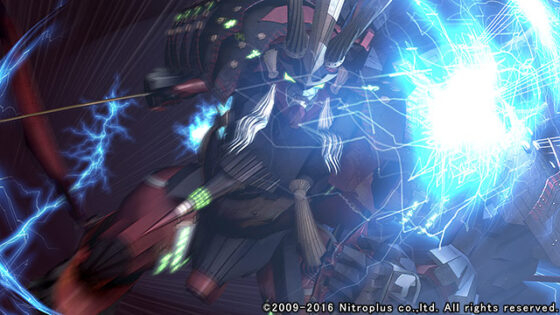
In a world dominated by warriors called “Musha” who pilot supernatural armors known as “Kenjutsu,” there exists a man claiming to be an unofficial police officer named Minato Kageaki. Clad in the crimson armor “Muramasa,” he confronts both serial killers and military brutality with overwhelming force. Yet he never claims to be righteous. “When facing demons, cut demons; when facing Buddhas, cut Buddhas”—these words, spoken upon merging with his armor, tell of the past and prophesy the future. He kills not only evil, but also the innocent who suffer under it. Is this surprising? No. For his armor bears the name of Soshu Uemon no Jo Muramasa—a cursed “Demonic Armor” that once transformed all of Yamato into hell itself.




Editorial Review
Near-future sci-fi noir meets samurai mysticism in this character-driven narrative where the protagonist’s moral ambiguity is as much the draw as the armored combat itself. Armored Demonic Muramasa occupies a rare intersection: it’s simultaneously a story about supernatural warfare and an examination of what happens when an instrument of destruction—whether cursed armor or damaged man—operates without institutional restraint. This positions it against the grain of typical mecha-adjacent narratives that default to heroic framing or clear ideological stakes.
What distinguishes this work is its refusal to separate Minato from Muramasa into convenient categories of man versus curse. The synopsis itself telegraphs this: he kills indiscriminately, justified through a zen-like philosophy borrowed from Buddhist killing precepts (“cut demons; cut Buddhas”). The worldbuilding tag suggests the developers have constructed genuine historical and mythological depth around the Muramasa legend rather than treating it as window dressing. The atmospheric and dark tags pair with character-focus to indicate this isn’t spectacle-driven; it’s a slow-burn exploration of a protagonist who may be irredeemable by design rather than circumstance. Story-driven confirmation means gameplay—if present—serves the narrative rather than vice versa.
This appeals squarely to readers who prize moral complexity over heroic fantasy, who engage with protagonists as systems to understand rather than figures to cheer. The combination of near-future setting with feudal Japanese supernatural weaponry is thematically deliberate, not aesthetic collision. If you’re drawn to works that treat their darker elements as philosophical inquiry rather than shock value, or if you’ve exhausted the conventional protagonist-saves-the-world formula, Muramasa’s cursed armor and amoral vigilante offer genuinely unsettling substance.
A meditation on inevitable destruction wrapped in samurai myth and cyberpunk trappings—darkly compelling.
This Week’s Top Rankings:
Related Tags:
Sci-Fi | battle | dark | Story-Driven | Great Worldbuilding
📖 How to buy on DLsite — step-by-step guide
💳 Payment methods for overseas buyers (Visa/MC declined?)
Interested? Get the free trial here ↓


![Thanatos -Smartphone Version- [triangle!]](https://henhenta.com/wp-content/uploads/2026/10/RJ01690733-300x225.jpg)
![【Smartphone】Troimerai to Hand-Folded Flowers [+Crab]](https://henhenta.com/wp-content/uploads/2026/10/RJ01690731-300x225.jpg)
![[Smartphone Version] Biotechnurse [Tenkatsu]](https://henhenta.com/wp-content/uploads/2026/10/RJ01610337-300x225.jpg)