
Synopsis
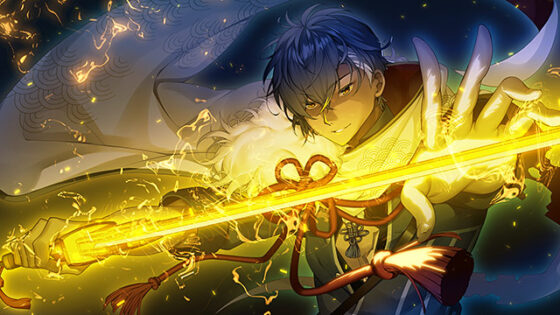
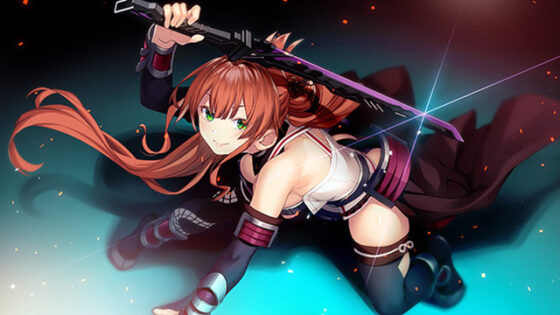
In 204X Japan, Blade Road (Jindō) has become a national sport, with the prestigious “Grand Presentation” tournament standing as its pinnacle. Suzakuin Nadeshiko, a current academy student and professional swordmaster, has achieved remarkable success in this tournament. Meanwhile, Takikawa Kazuma is a worn-down pro swordmaster earning daily wages in underground arenas—talented with the blade but cast aside by samurai society, living in the shadows.
When these two from completely different backgrounds meet by fate, their destinies become intertwined. “Kazuma, your sword is real. Let’s aim for the top of the Grand Presentation together!” As Team Shirorō expands with Takikawa Komari and Ei Parvi joining their ranks, they begin to shake the very stage of the Grand Presentation.
Victory brings glory; defeat brings ruin. In this harsh professional world, swordmasters step forward into an unforgettable battle, guided by their convictions. A swordmaster lives in the fleeting moment—and this moment is worth dedicating one’s soul to.



Editorial Review
Blade Road positions itself as a sports-romance hybrid with competitive spectacle at its center—a relatively uncommon combination in the adult game space, which tends to segregate athletic narratives from intimate storytelling. The premise leverages Japan’s real martial arts traditions while creating a fictional competitive framework (Jindō as formalized swordmastery sport), grounding the romantic plot in a world where physical excellence and prestige carry genuine narrative weight.
The work’s distinctive approach lies in its class-consciousness angle. Pairing Nadeshiko—a polished academy prodigy with institutional backing—against Kazuma, a talented-but-marginalized underground fighter, creates natural tension that transcends typical romance setup. This disparity drives both the competitive and relational dynamics, suggesting the narrative intends to explore how love bridges societal hierarchy rather than simply overlay romance onto action sequences. The addition of a team structure (Takikawa Komari and Ei Parvi joining Team Shirorō) indicates ensemble character development alongside the central romance, potentially offering varied relationship pathways or supporting character depth that distinguishes this from single-pairing focused works.
The visual presentation—emphasized through the “beautiful visuals” tag and the action-heavy gameplay loop—suggests strong production values in both combat animation and character illustration, important for a work where swordplay serves as both mechanical gameplay and romantic tension generator. The dual-platform availability (Android and Windows) indicates accessibility focus, appealing to audiences seeking portable, feature-rich adult titles.
This work targets players who want substantive romantic narrative scaffolded around competition rather than pure eroticism, and who appreciate character progression that integrates physical skill with emotional stakes. The synthesis of school setting, professional tournament drama, and class-crossing romance appeals to readers comfortable with longer narrative investment.
A rare adult game that treats swordmastery sport and intimate connection as equally serious dramatic threads, rather than bolting one onto the other.
This Week’s Top Rankings:
Related Tags:
romance | school setting | Action | battle | Windows
📖 How to buy on DLsite — step-by-step guide
💳 Payment methods for overseas buyers (Visa/MC declined?)
Interested? Get the free trial here ↓