
Synopsis
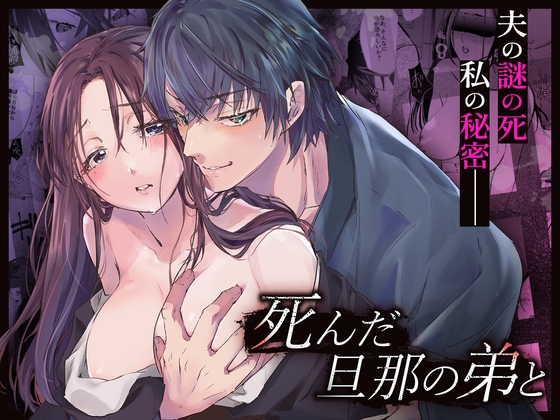
Wartime Tokyo suburbs, the Arita household.
Yukiko has lost her beloved husband Seiryuu to a tragic accident.
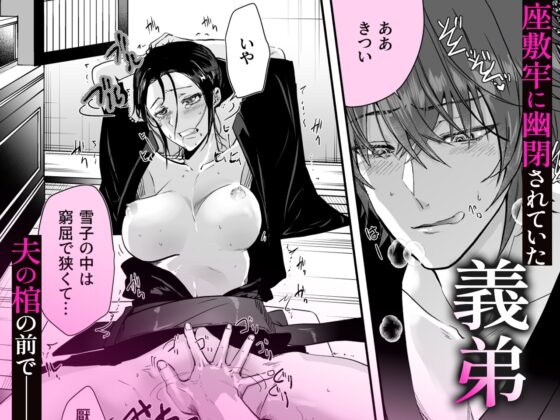
Her late husband’s will contained incomprehensible instructions: to transfer the family headship to her brother-in-law Tairyou, who suffers from psychological issues and is confined in a locked room.
After inheriting the headship, Tairyou begins displaying abnormal obsession toward Yukiko…
This is a manga adaptation depicting the complex love and hatred between three individuals.
Cover: 1 page
Main content: 82 pages (including 1 character introduction page)
Total: 83 pages
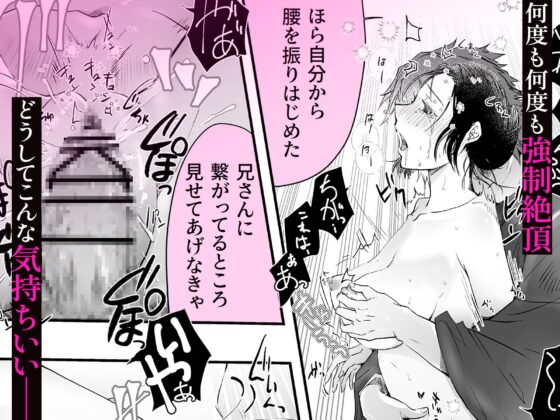
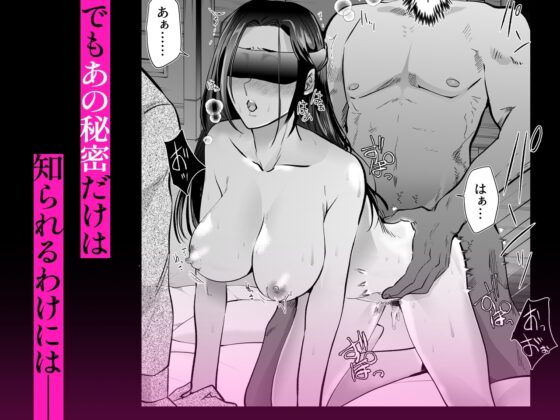
Content includes: Non-consensual situations, missionary position, various positions, outdoor activity, confinement/restraint/blindfolding, creampie, and coercive scenarios.
Get “My Dead Husband’s Brother” on DLsite
This Week’s Top Rankings:
Editorial Review
Psychologically dark romance anchored in wartime constraint, *My Dead Husband’s Brother* occupies the narrow intersection of obsessive-love narratives and non-consensual content—a territory that demands precise execution and thematic clarity to justify its transgressive elements. The wartime Tokyo setting provides historical framing that contextualizes, though doesn’t sanitize, the power imbalances and psychological coercion that drive the narrative.
What distinguishes this work from standard dark romance is its triangular structure built on absence: the deceased husband’s will functions as a ghost mechanism orchestrating the catastrophe to come, making Seiryuu’s death the narrative’s true catalyst. Tairyou’s confinement—both literal and psychological—serves dual purpose: establishing him as simultaneously victim and perpetrator, complicating clean moral positioning. The tag cluster of restraint, blindfolding, and coercive scenarios isn’t window dressing here but structural to exploring how trauma and obsession distort intimacy. The inclusion of outdoor activity within the non-consensual framework suggests the mangaka’s deliberate choice to expand violation beyond domestic space, amplifying the psychological violation rather than retreating into familiar confines.
At 82 pages of content, the work commits substantively to psychological development rather than mere shock value, though readers should expect escalating intensity across its various position scenarios. The combination of non-consensual content with psychological drama remains relatively uncommon in the girls’/otome manga space, where darker romances typically preserve some consent framework or fantasy buffer.
This will resonate specifically with readers seeking psychologically complex dark romance who don’t require consent as a prerequisite for investment, and who appreciate wartime historical texture as more than aesthetic dressing. Those approaching non-consensual content purely for graphic intensity without character complexity should look elsewhere.
For readers navigating transgressive romance with eyes open, this delivers genuine psychological architecture beneath its provocative premise.
Related Tags:
Creampie | Restraint | non-consensual | dark romance | psychological drama
📖 How to buy on DLsite — step-by-step guide
💳 Payment methods for overseas buyers (Visa/MC declined?)
Interested? Get the free trial here ↓

![[Sampler] How a Lonely Vampire Reclaims His Reincarnated Fiancée ~An Obsessive Love Spanning 300 Years~](https://henhenta.com/wp-content/uploads/2026/09/RJ01114970-300x225.jpg)