Synopsis
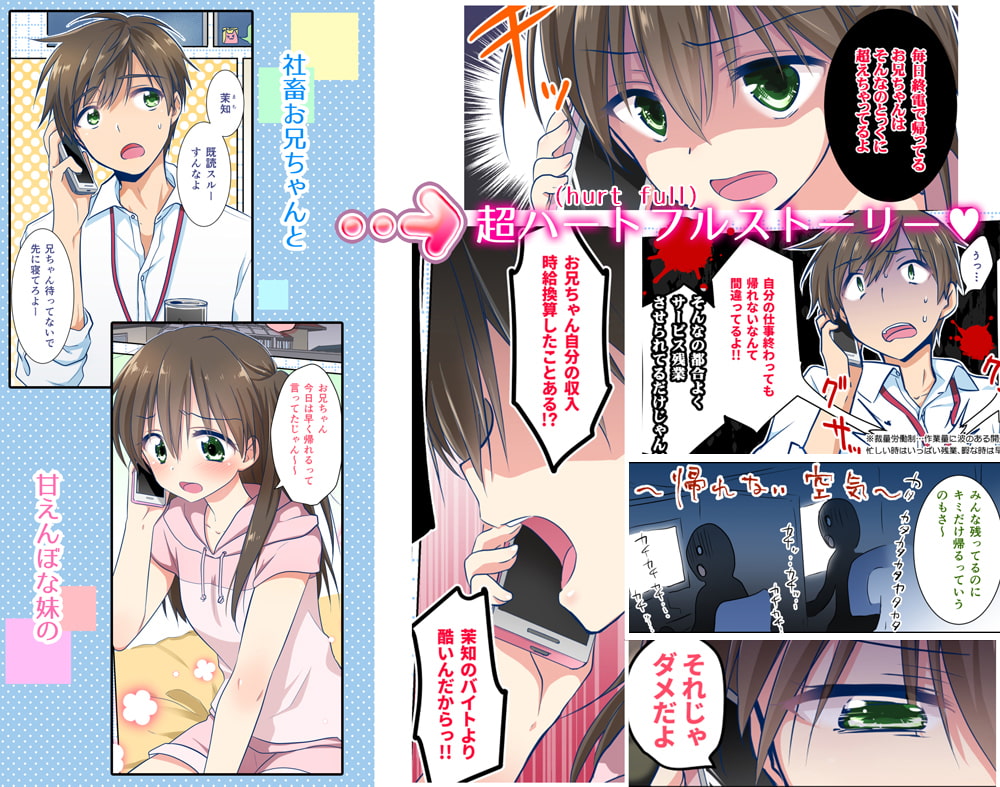
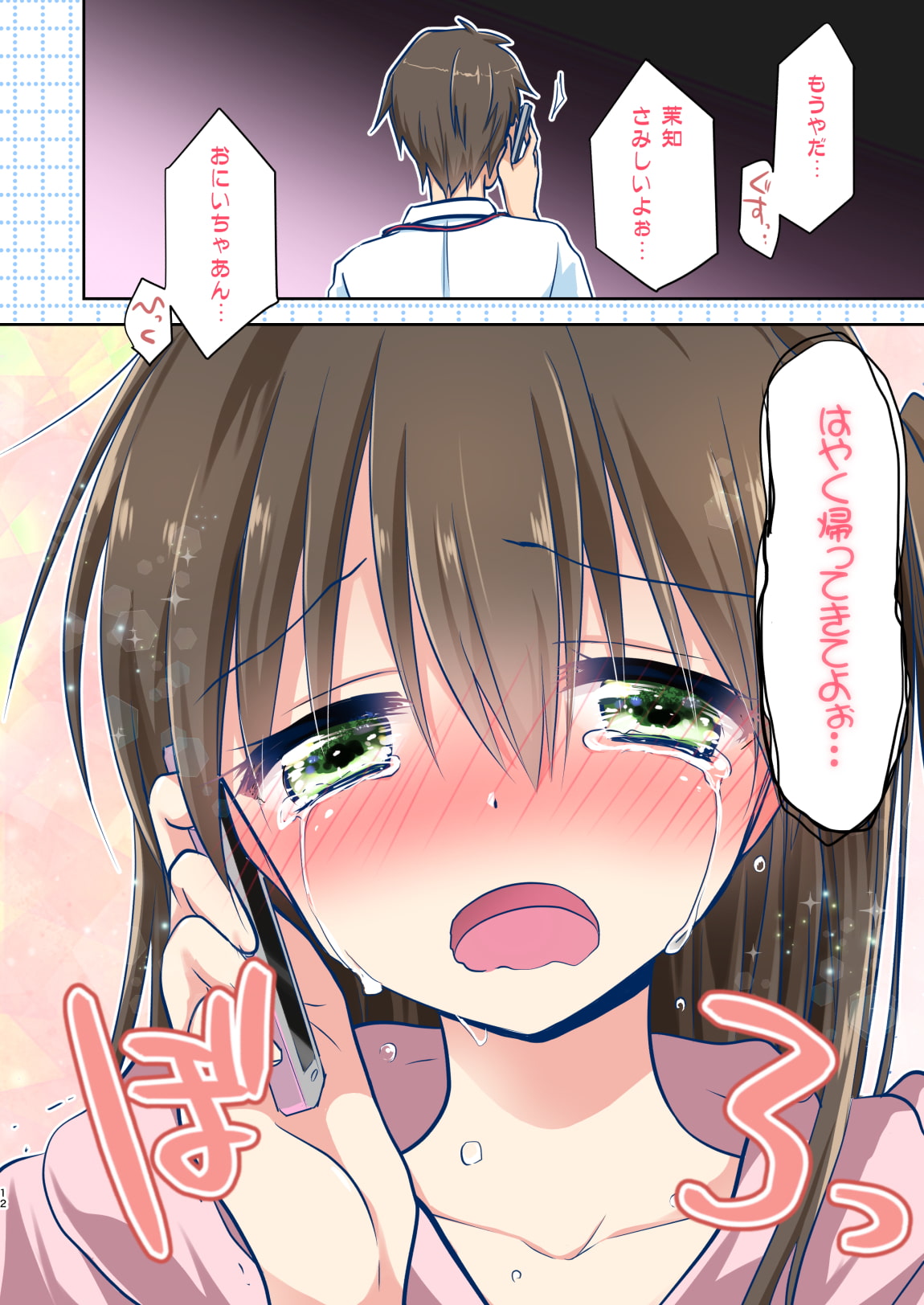
A heartfelt story about a needy little sister and a corporate sl*ve older brother!
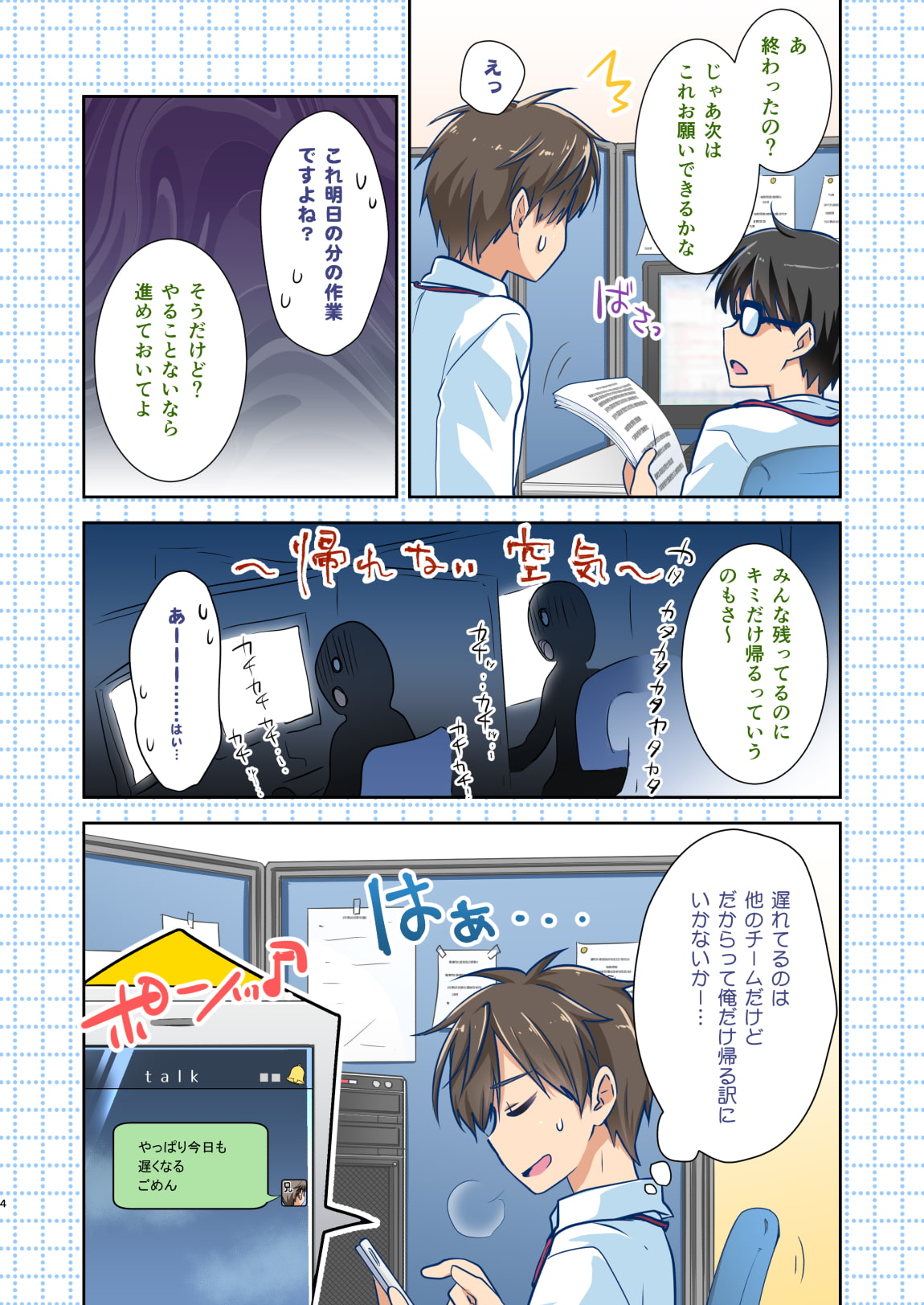
The older brother cannot go home because of his company’s toxic work culture…
when he tells his little sister he’s going to be late she bursts out in tears…!?
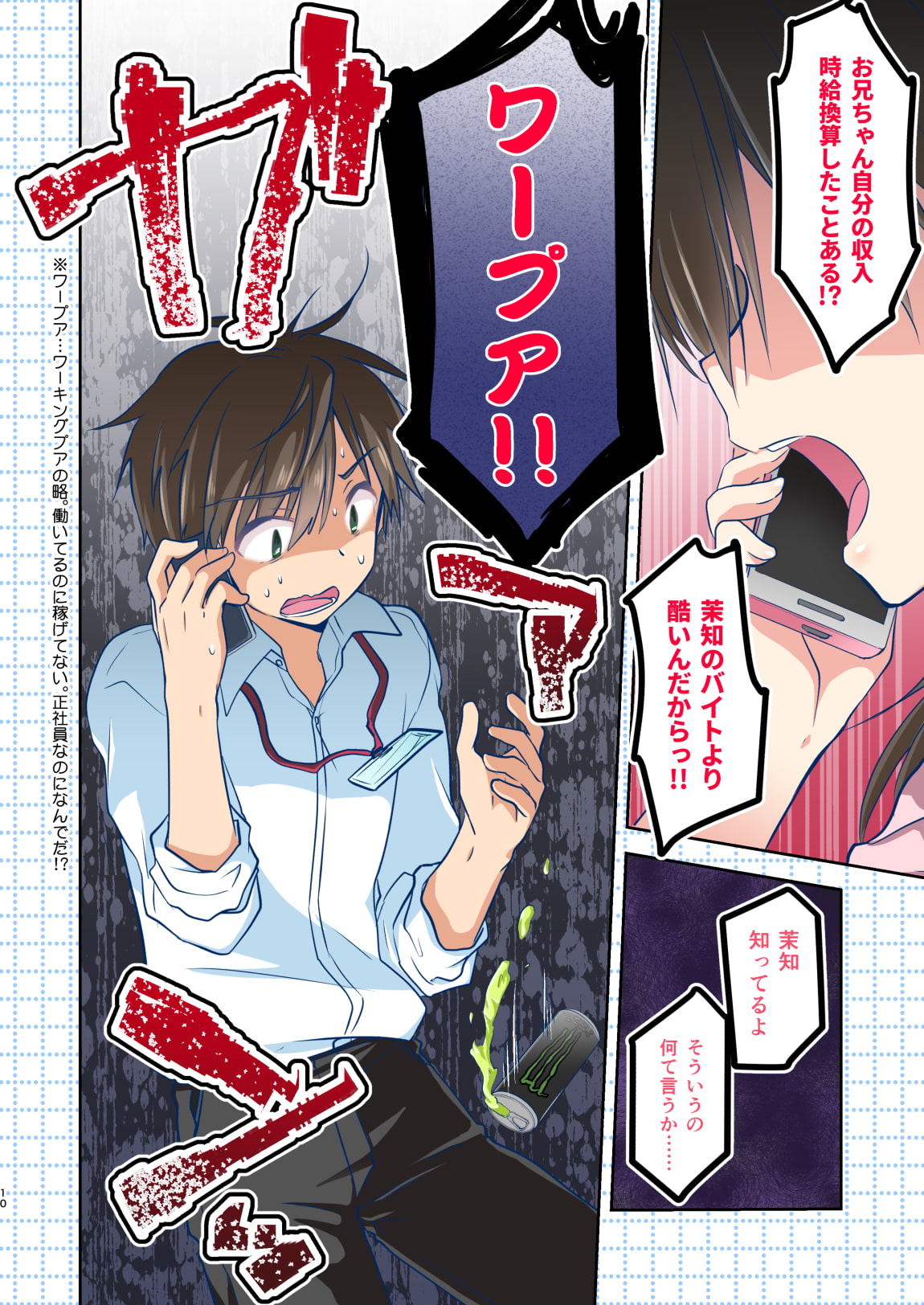
While crying she lashes out at and derides exploitative company.
“Oniichan! Did you know? If you calculate your hourly wage,
your company is paying you less than my part time job pays me!!!”
Full Color Manga
15 main manga pages + 10 illustrations of the little sister’s tear-stained expression.
* This is color ver. of a manga initially released in 2016.
* Please keep in mind that some of the contents discussed in this work regarding working conditions, labor laws, and current affairs may differ to what is the norm today.

| Circle | AquaDrop |
| Tags | Manga, JPEG, PDF file, Japanese |
| Price | 55JPY |
Editorial Review
This is a quietly subversive slice-of-life manga that weaponizes the “dependent sibling” dynamic to critique Japan’s notoriously exploitative corporate culture. Rather than mining the relationship for melodrama or worse, the work positions the little sister as the moral center—her tears aren’t manipulation but justified rage at an economic system that’s literally stealing her brother’s time and dignity. That’s a sharp inversion of typical manga conventions around family obligation and filial sacrifice.
The hook here is deceptively simple: when an overworked salarymanbrutalizes his schedule once more, his sister’s emotional breakdown pivots into economic argument. Her comparison of his hourly wage against her part-time job becomes the work’s thesis—a direct indictment of how normalized wage theft has become within Japanese corporate hierarchies. It’s the kind of social commentary that lands hardest when delivered through tears and sibling affection rather than polemics, and this work understands that tension.
The production values back up the concept. Full-color presentation elevates what could have been a throwaway blog post into something intentionally designed; the additional ten illustrations of the sister’s tear-stained expressions suggest the artist is invested in the emotional specificity here, not just the talking points. The format choice—15 pages with supplementary artwork—reads like a deliberate restraint, trusting that concentrated impact outweighs sprawl.
Readers who’ve felt the cognitive dissonance of watching someone they care about grind themselves down for subsistence wages will find this acutely resonant. Those seeking feel-good family content should look elsewhere. This is catharsis through recognition, delivered with full-color clarity and the kind of specific wage-math that hits different when uttered through a sibling’s sobs. It’s a 2016 work, so labor law references may feel dated, but the core frustration it articulates remains remarkably current.
Get “My Little Sister’s Crying, So ” on DLsite
This Week’s Top Rankings:
📖 How to buy on DLsite — step-by-step guide
💳 Payment methods for overseas buyers (Visa/MC declined?)
Interested? Get the free trial here ↓