
Synopsis
【STORY】
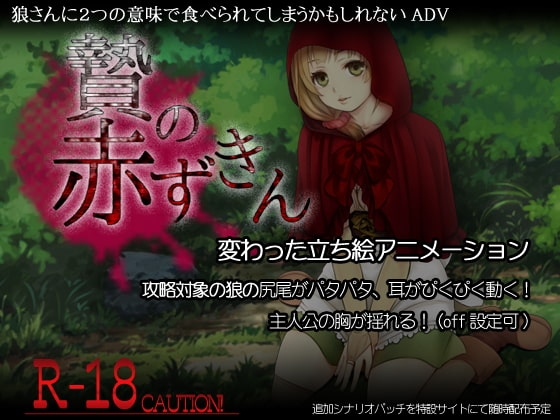
When a woman gains magical power and becomes a witch, she stops aging from that point forward.
The witch living in the forest near the protagonist Lilia’s village became a witch at an old age, and now desires a youth restoration potion.
The ingredient needed is a girl at the prime age of youth. The potion’s effects fade with time, returning to normal after approximately ten years.
Once every decade, the protagonist’s village offers a maiden to the witch in exchange for magic that protects them from forest beasts. However, the villagers despise escorting the sacrificial maiden to the witch’s home, and the witch with her bad legs refuses to fetch her.
So they deceived the girl, dressed her in conspicuous red clothing for the nearly-blind witch to easily spot, and sent her alone into the forest. “An elderly woman living alone in the forest is ill. Please visit her.”
To obscure the truth, they didn’t call her a sacrifice—instead, they named her after her clothing: “Little Red Riding Hood.”
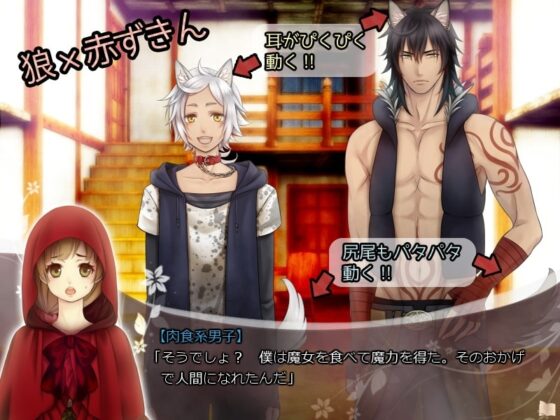
Selected as this year’s Little Red Riding Hood through her stepmother’s schemes, the protagonist awaited her fate. But instead of an elderly witch, two wolves who devoured the witch and claimed her magic were waiting for her…


Editorial Review
This is a dark subversion of a fairy tale framework deployed as a vehicle for non-consensual beast girl content—a positioning that’s become increasingly common in the doujin space as creators push against narrative conventions for transgressive appeal. The work’s core appeal lies not in freshness but in its willingness to deconstruct a classic story through exploitation of its central character.
What distinguishes this entry is its commitment to psychological setup over immediate gratification. The synopsis establishes a systemic deception: an entire village conspires to sacrifice Lilia under false pretenses, using her innocence and clothing as markers for a near-blind predator. This framing—where the threat isn’t isolated but collective and normalized—adds texture to what could otherwise be straightforward predation fantasy. The witch’s dependency on periodic youth restoration creates cyclical inevitability; this isn’t aberration but ritual. The yandere tag suggests the witch’s attachment to Lilia transcends simple predation, potentially evolving into obsessive possession, which complicates the power dynamic beyond standard non-consensual scenarios.
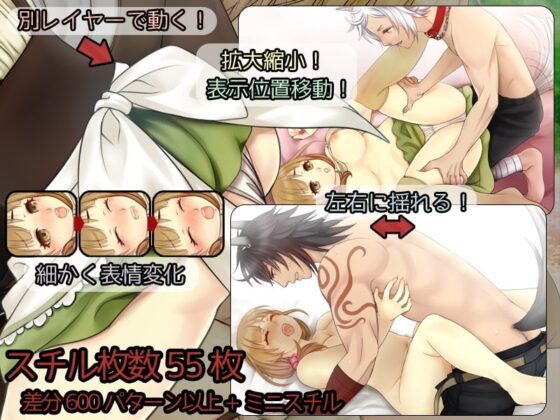
The kemono and beast girl elements appear paired with the multiple partners tag, indicating the witch may not be Lilia’s sole antagonist. Combined with the madness tag, this suggests psychological deterioration or dissolution rather than mere domination—a darker throughline than typical beast girl fare.
This appeals specifically to readers seeking non-consensual narratives grounded in systematic betrayal and psychological unraveling rather than isolated assault scenarios. The fairy tale scaffolding provides narrative legitimacy for the transgression.
The execution hinges entirely on whether the psychological elements justify the premise or merely dress exploitation in literary clothing. For those invested in narrative-driven non-consensual content with thematic depth beyond surface transgression, the setup promises substance. For others, it remains what it is.
Get “Sacrifice: Little Red Riding H” on DLsite
This Week’s Top Rankings:
Related Tags:
Fantasy | non-consensual | multiple partners | Yandere | beast ears
📖 How to buy on DLsite — step-by-step guide
💳 Payment methods for overseas buyers (Visa/MC declined?)
Interested? Get the free trial here ↓


![Thanatos -Smartphone Version- [triangle!]](https://henhenta.com/wp-content/uploads/2026/10/RJ01690733-300x225.jpg)
![【Smartphone】Troimerai to Hand-Folded Flowers [+Crab]](https://henhenta.com/wp-content/uploads/2026/10/RJ01690731-300x225.jpg)
![[Smartphone Version] Biotechnurse [Tenkatsu]](https://henhenta.com/wp-content/uploads/2026/10/RJ01610337-300x225.jpg)